Archives:

Art Shows, CD songs

Sweetest Flower of Them All

August 1, 2020

Bluebirds in the dogwood/Sing her stately praise

Jewel of the Ozarks/A floral gem bouquet

Although the dogwood is the State Tree of Missouri, the White Hawthorn Blosssom is the official Show-Me State Flower as designated by our legislature in 1923. The above couplet is the opening verse of a song about the state flower written and recorded 15 years ago by the BRC founder on his second CD album fund-raiser to benefit the local Children`s Hospital (check-out the sound file below). The bluebird is the official State avian.

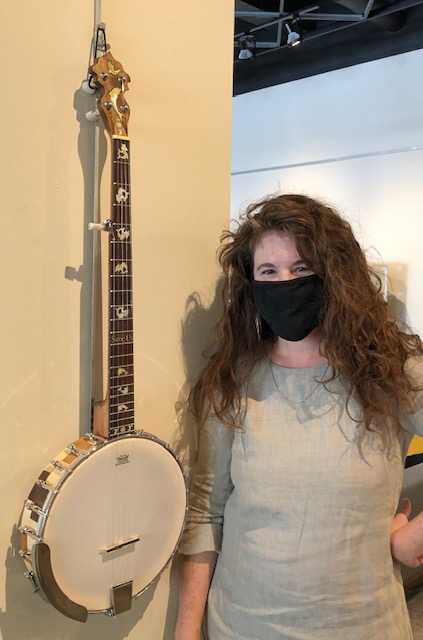
For its mid summer juried show, the local Art League challenged its members to explore the theme of “Monochrome” by focusing on one color to examine its history, symbolism, and culture. The BRC founder fashioned the “White Hawthorn Blossom ” banjo to be a study of shade, tone, and tint. As a member of the rose family, the beauty of this Ozark bloom is guarded by spike-like thorns represented by pointy mother of pearl inlays on the truss rod cover and fretboard amongst the flowers. A small butterfly explores the 7th fret space.
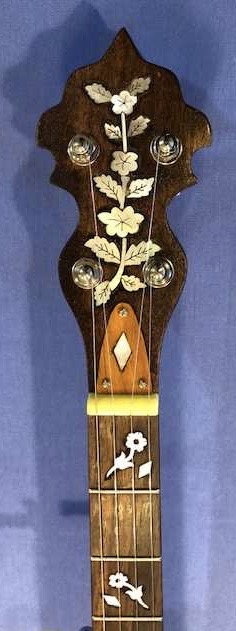
 

There are numerous species of the White Hawthorn Blossom found throughout the Ozarks. As seen on the peg head, the flowers grow on a small tree which produces a tiny apple-like fruit, and some Missourians call the tree a “wild haw.” The blooms are often referred to as “mayflowers" because the buds unfold in May.
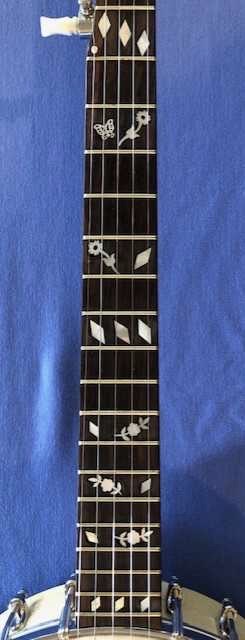
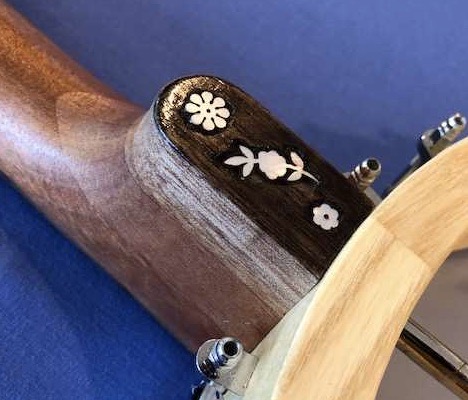


A hallmark of BRC banjos, the heel of the WHB neck has mother of pearl inlays for the eyes- only of the musician.


On the eve of the Monochrome exhibit opening, the WHB banjo appeared on the Art League Facebook page in a sneak preview of the show.


Listen closely to the below “White Hawthorn Blossom” sound file, and you will note that the bass E string on the guitar is tuned down to D. Enjoy.


” White Hawthorn Blossom” (copyright 2005).


From the BRC: be safe, wear a mask, keep on picking.
Vega Martin Stories

MOP Ends & Gone Fishin`

July 25, 2020

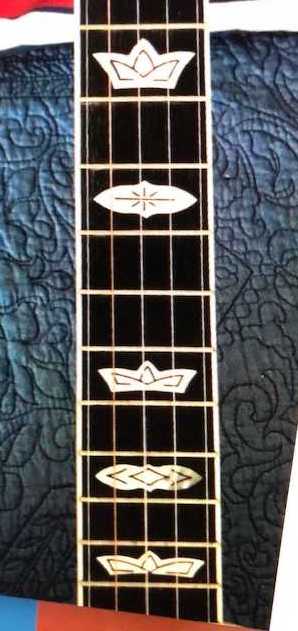
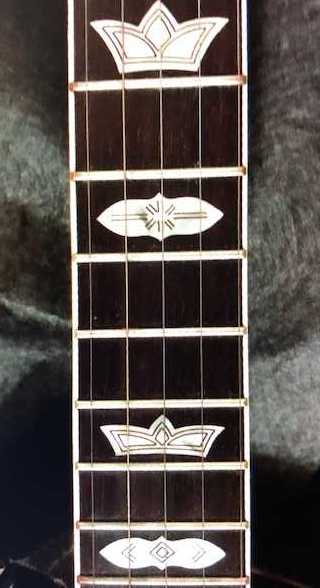
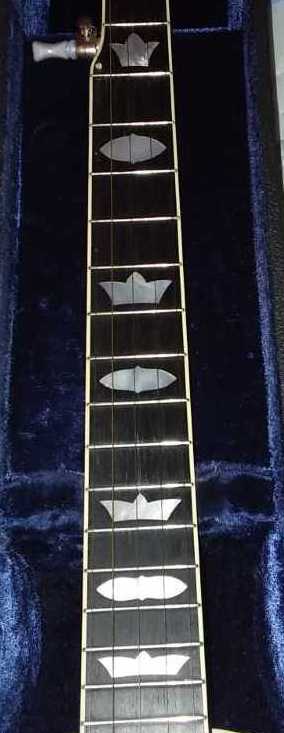
As the Vega banjo franchise changed hands among various owners during the 1970-1980 decades, the mother of pearl (MOP) features on their mid-range banjos underwent several iterations. In the Boston 1966 Vega catalogue, the “Pro II” series made its debut appearance with a new and innovative football-and-crowns mother of pearl inlay pattern on the fretboard (left) to replace the blockish inlays on the fingerboard of the preceding “Professional” banjo marketed in their 1963 catalogue. These same decorative but somewhat unadorned inlays were inherited as the fretboard appointments on the “new” VIP model that soon emerged in the 1968 Vega catalogue.

After C.F. Martin purchased the Vega brand in May of 1970, the VIP banjo line surged in popularity. A single-stripe engraving (below) was added to embellish the appearance of its MOP inlays. During the 1970-1979 Martin era, over six hundred VIP-5 string, tenor, and plectrum banjos were manufactured in Nazareth, PA.

In 1979, C.F. Martin sold the Vega franchise overseas to the Galaxy conglomerate which marketed their newly-acquired banjo lines in the USA via the TMC vendor (Targ & Dinner 20 Century Music Company). To upgrade the MOP pattern on their VIP series, a double stripe engraving (left) was implemented.

Galaxy went bankrupt in a few years, and Greg Deering purchased the Vega brand in 1989 to restore the franchise to greatness. The football-and-crowns fretboard ornamentation was not revived, and the history of this unique pattern of MOP inlay ended.

While local jam sessions have been on hiatus for several weeks in response to recent Covid-19 data, the BRC founder spends time with grandkids on the dock behind his workshop. Each youngster has a grandpa-built banjo in their home.

From the BRC: Be safe, be well, and be picking……or fishing.

P.S. In his workshop, the BRC founder has been listening to an audiobook of Tolstoy`s classic novel War and Peace, a prodigious narration of 55 hours duration. Only 18 hours of listening remain.

Art Shows

Reopen & Save Us

July 11, 2020

Our university town art league recently discontinued most of its virtual online galleries and reopened its exhibit hall to the public for presentation of the annual members-only “Summer Open” juried show.

Patrons may now enter the premises, but only a few at a time, and all must wear masks.

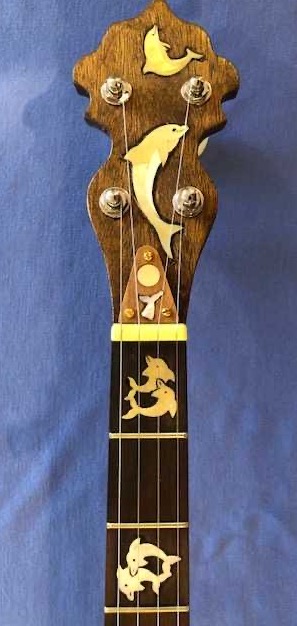
The BRC founder entered his “Save Us” (Golden Dolphin) banjo into the competitive exhibit. This 5-stringer depicts sunny dolphins frolicking in the open expanses of the sea.

Some species of this magnificent aquatic mammal are at risk of extinction from human related activities like whaling, climate change, and pollution. Note the message at the octave fret space (right).

The vulnerability of this extraordinary creature reminds us of our own fragility while living under the cloud of a global pandemic.

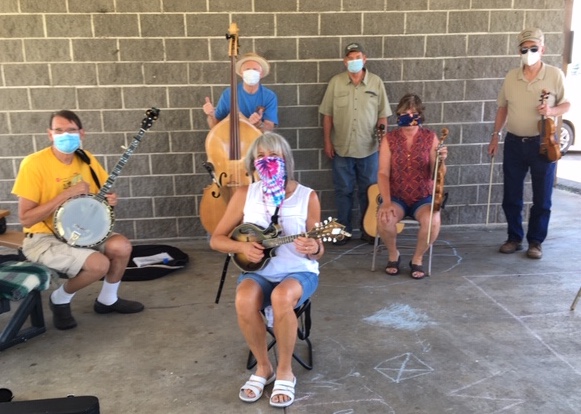
Despite summer heat and humidity, Show-Me State musicians in a rural township have sought to save the regional tradition of Bluegrass music by performing it at a community outdoor pavilion while hidden behind masks like desperados and observing social distancing. Pick up trucks park outside the pavilion, and the occupants role down their windows to enjoy some live entertainment, a brief respite from these uncertain times.

Music brings people together.

Referring to themselves informally as The Milquetoast Rangers, the jammers have modified their moniker to The Rock Island Rangers to reflect the name of the local park where they have been conducting their weekly outdoor jams instead in the activity room of a nearby burger shop.

Because of a recent upturn in the local Covid-19 data, this picking session and other related jams are currently on hiatus.

From the BRC: be safe, stay well, and save the music.

Art Shows

The 4th

July 1, 2020

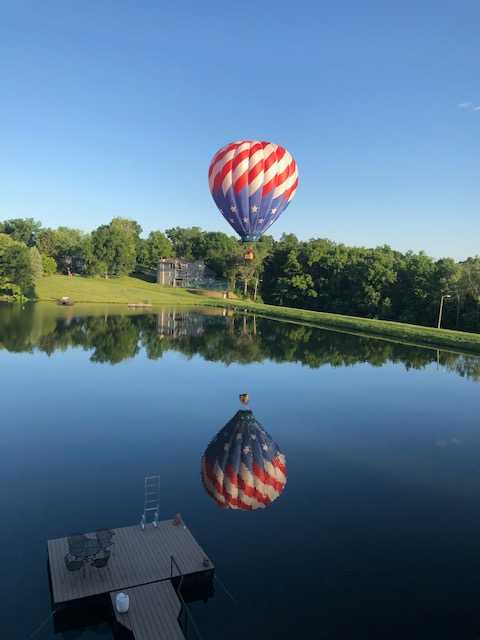
Heralding the upcoming Fourth of July holiday weekend, a festive hot air ballon recently passed over our dock just outside the back door of the BRC workshop.

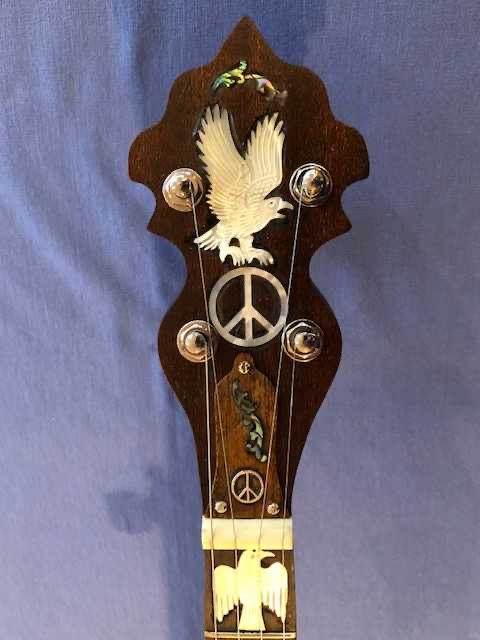
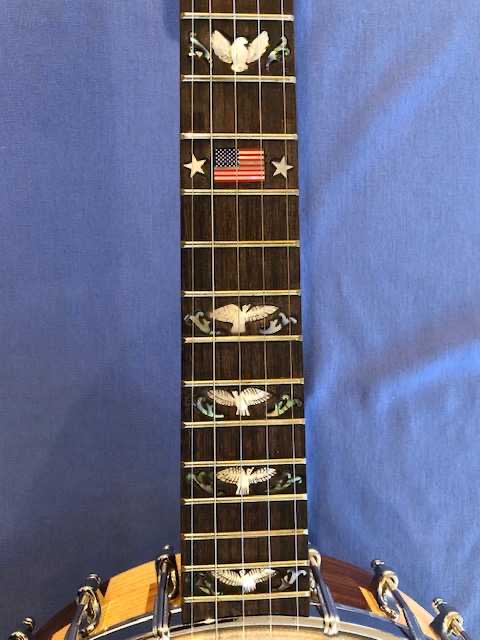
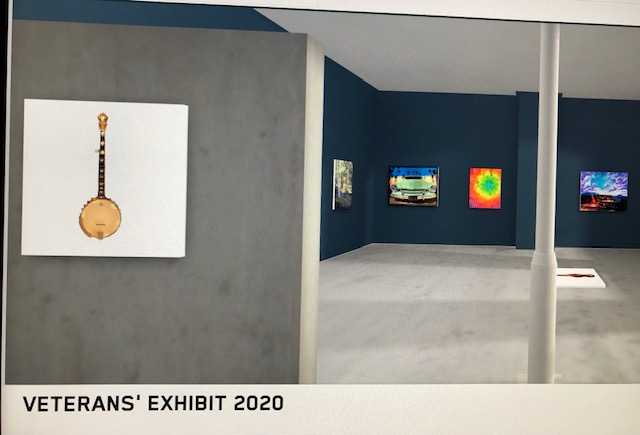
The sprawling 62nd annual “Art in the Park” weekend festival hosted by the Columbia Art League this summer was cancelled. Its Veterans Art Pavilion, co-sponsored by the United Veterans Foundation, was presented online as a virtual exhibit. The BRC founder, a USAF veteran, had his “Freedom Eagle” banjo accepted into the show.

Take a guided tour of the pavillion at https://columbiaartleague.org/veterans-art-pavilion

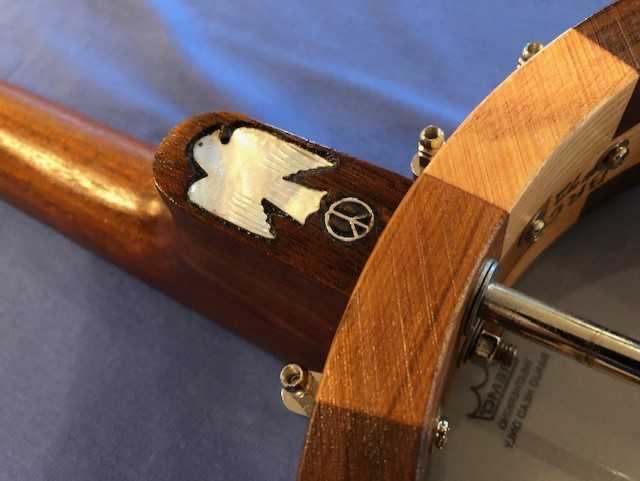
BRC banjos have a signature mother of pearl inlay on the heel of the neck for the eyes-only of the musician.

A life long student of military history, the BRC founder has walked battlefields in the US, Europe, Middle East, and Southeast Asia. While tinkering in his workshop, he listens to audiobooks about these engagements and the participants.

From the BRC, we wish you a restful and peaceful holiday weekend.

Vega Martin Stories

Bluegrass Special Order

June 21, 2020

From the BRC Mailbox:

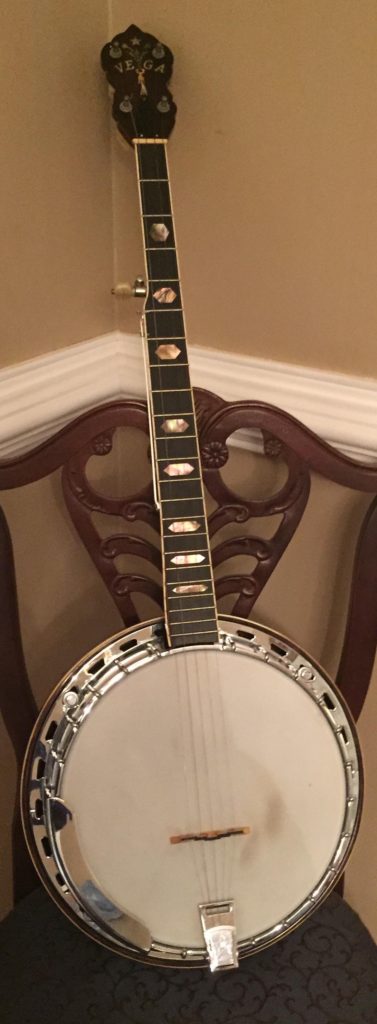
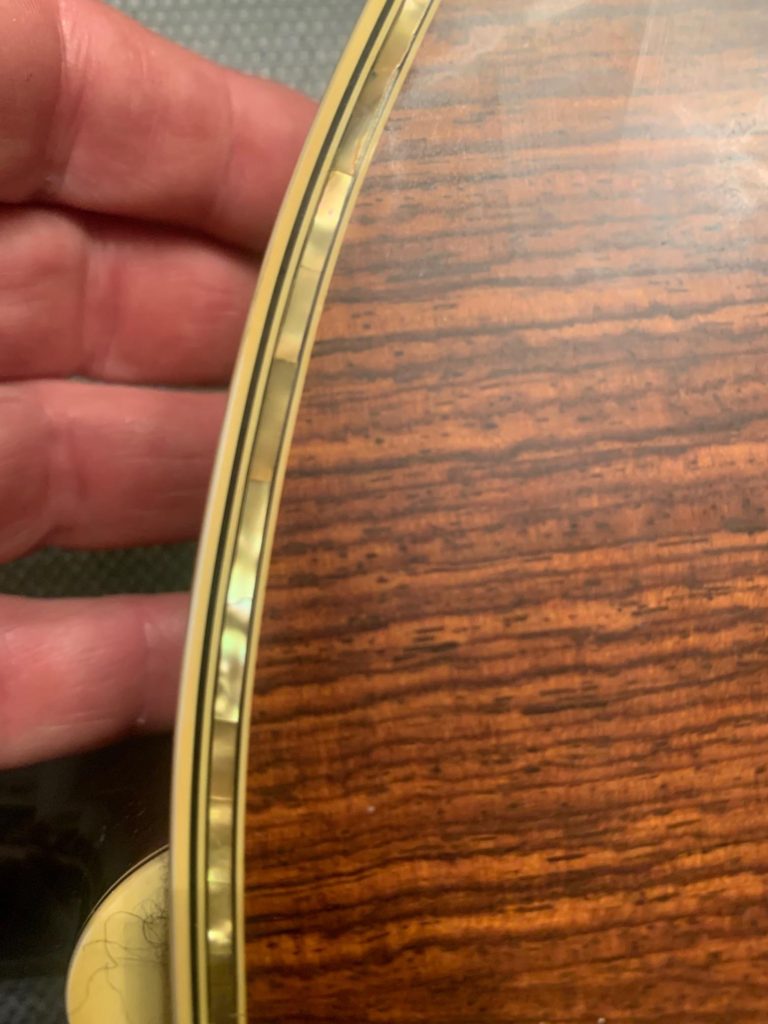
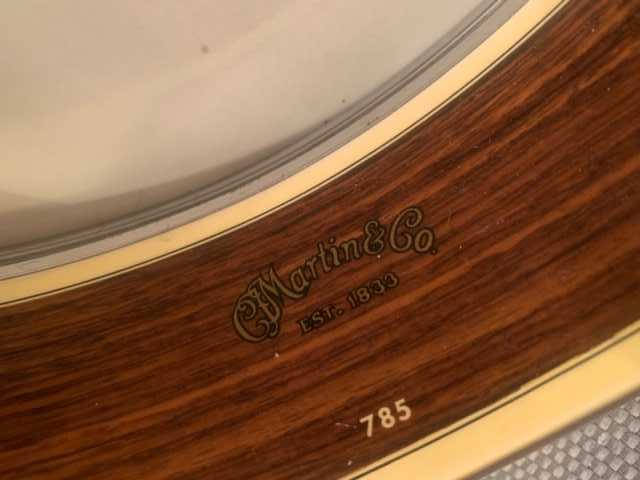
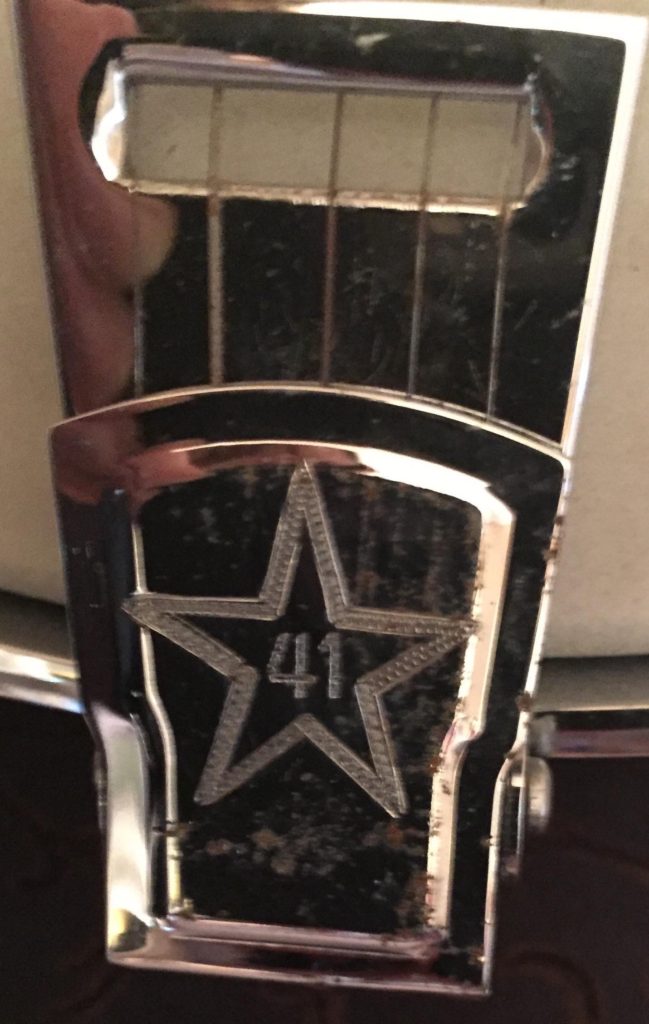
Dear Reader- Thank you for the detailed photos of the vintage V-41 Vega Martin banjo. This item was initially announced in a 1971 C.F. Martin price list for $850 without case, and thereafter it appeared in the Vega Martin 1972 catalogue. The shop logbook does not record this model instrument actually being manufactured until 1973, and it was advertised again in the 1976 VM catalogue.

The V-41 was the less expensive version of the fancy gold-plated and engraved V-45 banjo (retail $1650) designed to match the D-45 guitar. Both these models of banjo were available by special order only and reportedly fathered by Mike Longworth to attract the Bluegrass market.

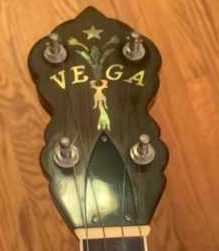
The V-41 had a rosewood resonator and pot, and the resonator had a pearl abalone trim on its back edge. The neck was mahogany with a bound ebony fingerboard that featured distinctive hexagonal mother of pearl inlays. The metal parts were chrome-plated, and the heavy flat head tone ring was brass. Your banjo serial number 785 was one of a pair of V-41 five-stringers manufactured in 1974 per Shop Order #2187 in Nazareth, PA.

The last V-41 parts were made in 1977 and shipped to Japan for assembly. C.F. Martin produced only twenty-eight V-41-5 banjos, two V-41-P plectrums, and one V-41-T tenor banjo.

My estimate is that your single-owner instrument is probably worth around $1450-1750 these days. Thanks again for sharing the story of your unique and historical banjo.

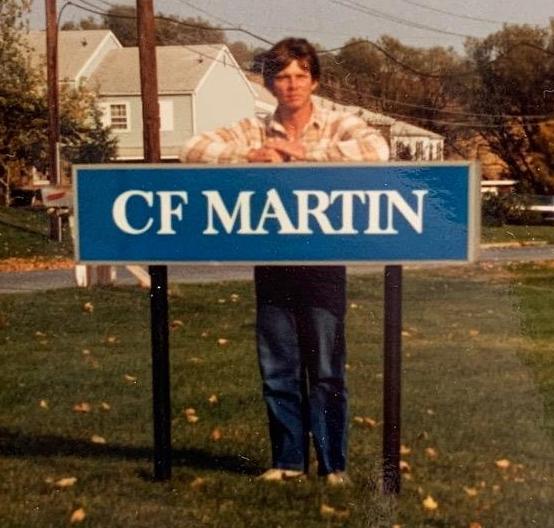
In this circa 1975 photo, the new V-41-5 owner visits an iconic site in Pennsylvania.

From the BRC: Be safe, be well, and keep on picking.