Browsing Category

Bio

Bio

Harping on the Blues

April 25, 2026

A harmonica can add a country blues flair to any acoustic music performance.  The key to mastering this diminutive musical instrument is to understand its inherent features and proper model selection. A classical chromatic or slide harmonica has a button that allows the musician to play all semitones as would be found on the keyboard of a piano. A diatonic harmonica, however, is tuned to a specific key such as C, D, or G, and can generally be intune only with that specific key. The quirky trick to playing blues tunes with this tiny hand-held instrument is to understand manipulating the notes available on the designated key prominently marked on the selected instrument. Hence, a diatonic C, D or E, etc. harmonica can readily play simple melodic folksy tunes in its designated key such “Home, Home, On the Range” or  “There`s No Place Like Home.” The blues scale, however, can be only attained by what is called  the “cross-harp” or “cross-key” technique.

In order to play a funky sounding harmonica to accompany a blues song, the harmonica selected must be in the subdominant key of the song. For example, in the key of C, the C chord is the so-called dominant chord of the tune; and the F chord is the so-called subdominant chord of the tune.  Lastly, the G chord would be called the tonic chord of the key of C. To access the blues scale of notes, however, an F harmonica would be played to accompany a song in the key of C. Parenthetically, in the key of G, a C harmonica would be selected to provide the obligato blues scale for the performance. Again, this quirky but fundamental cross-harp or cross-key strategy is vital to producing the signature blues note selection and melodic runs for the performance.

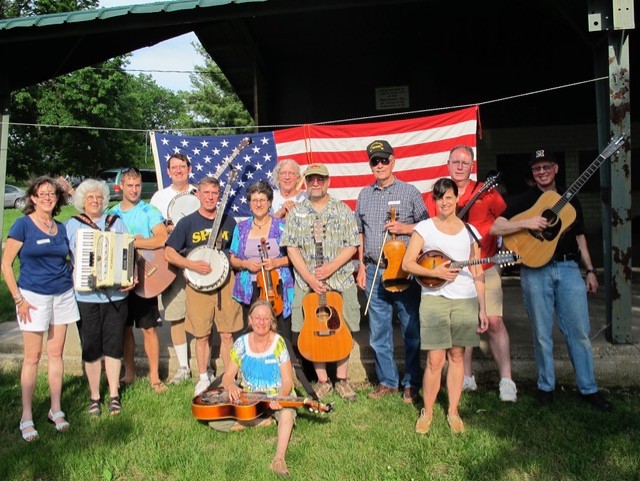
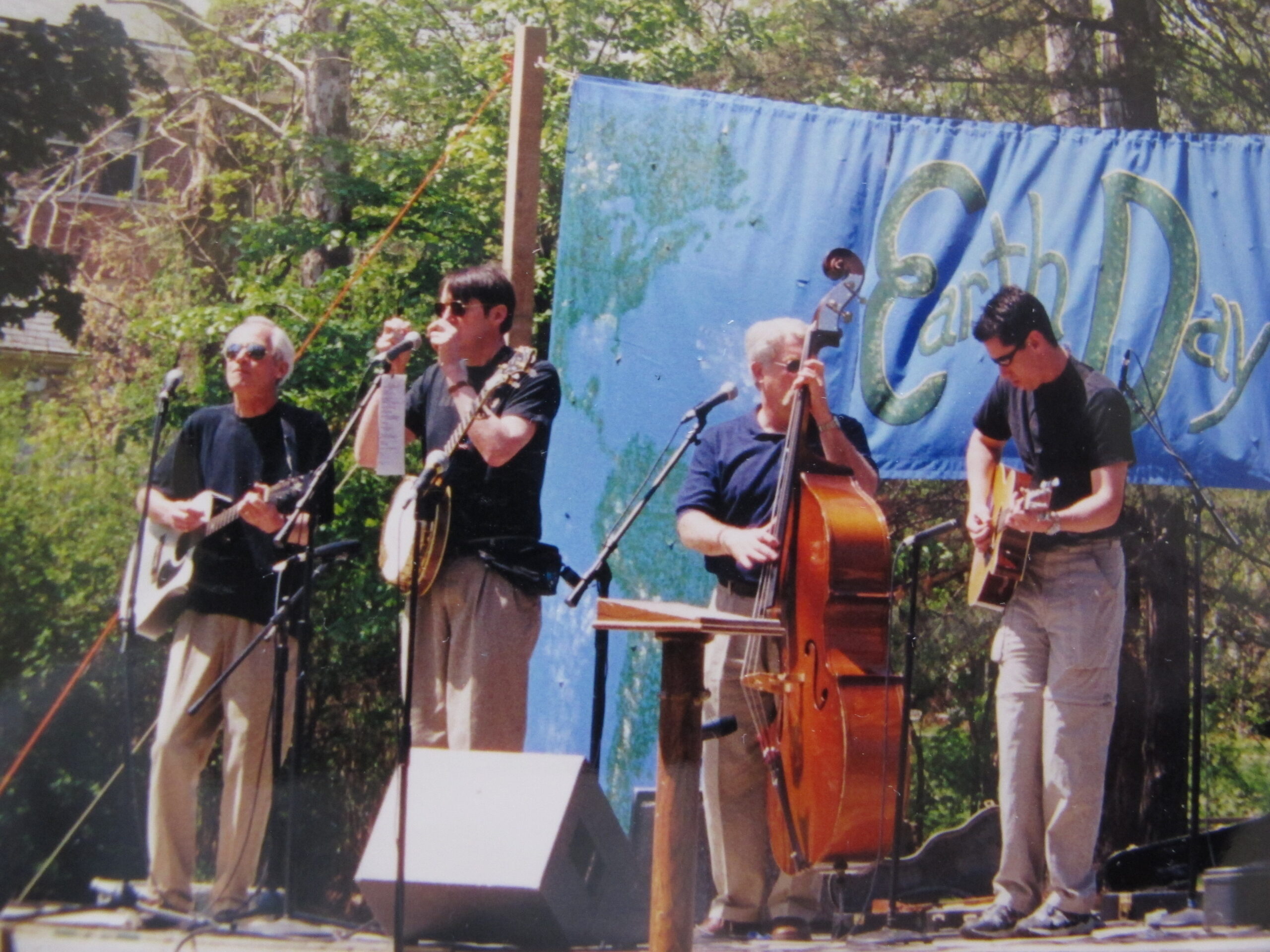
The BRC musician primarily uses the Hohner Special 20 (Progressive) harmonica for these tunes, and he carries around about a half-dozen of them in different keys in a hip pack when enroute to a gig. As seen in the below photo, the BRC banjo picker (sporting a hip pack) readies to play a harmonica solo at a sunny springtime park festival. His son plays guitar far right.

Check-out You Tube for Sonny Terry cross-harp playing his electrifying and whooping rendition of “Lost John” or John Sebastian playing a bluesy harmonica solo at the 1965 Newport Folk Festival. The BRC musician missed this latter live performance having attended only the 1964 Newport Folk Festival in his youth. In a brief interview a couple of years later with John Sebastian, the young BRC  journalist/college newspaper reporter, learned that Sebastian had grown up with a father who was a classical harmonica player. Bob Dylan does not cross harp but plays mostly a Hohner Marine Band harmonica in the same key as his guitar, a common practice in the folk music genre. Dylan positions his mouth harp with an around-the-neck harmonica holder, so he can simultaneously player guitar. The BRC musician still has a similar but somewhat tarnished harmonica holder purchased during his college days of yesteryear.

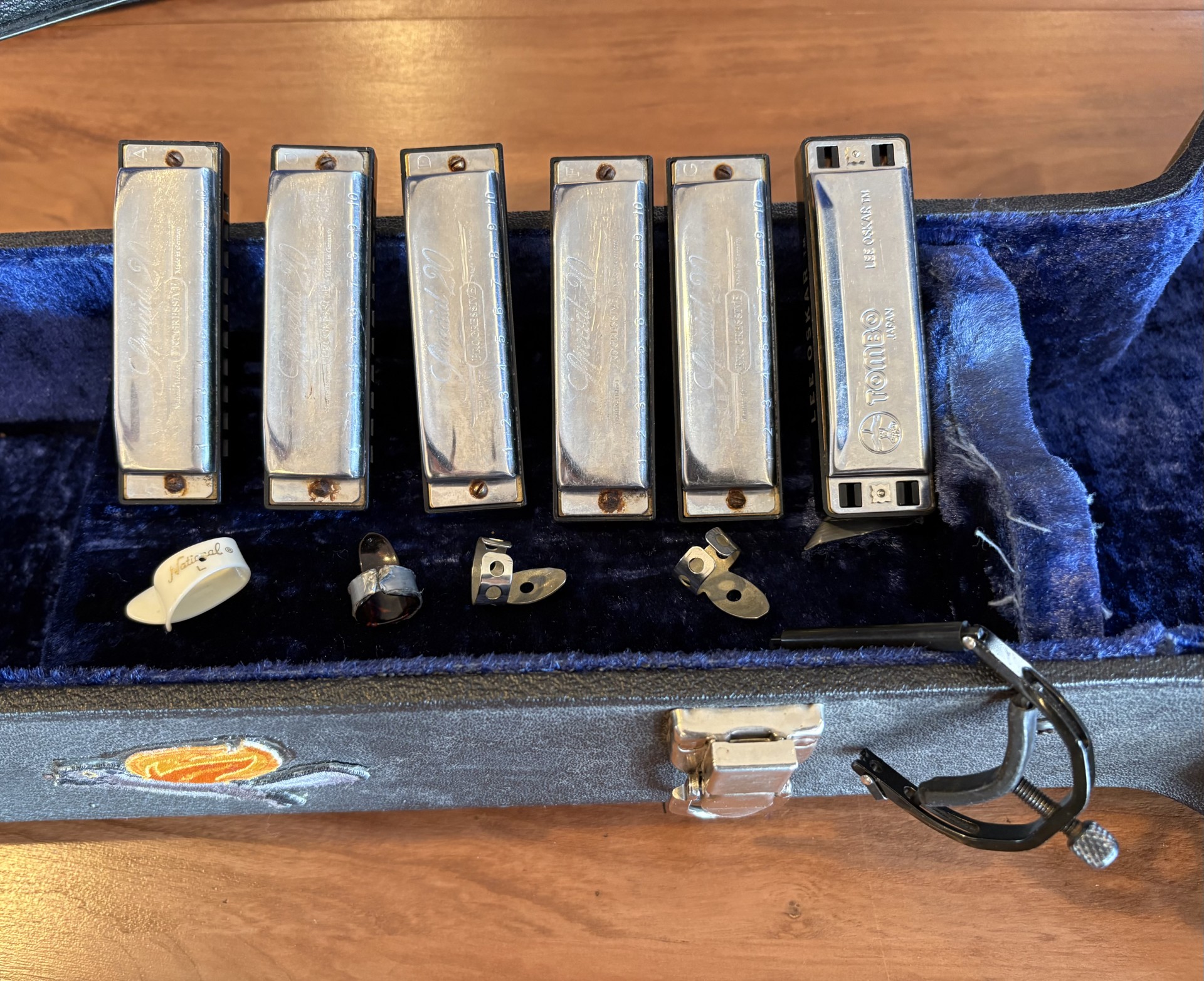
When playing at jams, the BRC musician lines-up his harmonicas alphabetically in his banjo case for easy access as seen above. Although he regularly washes out his Special 20 harmonicas, Hohner recommends to not soak the instrument.

To hear a blues harp solo by the BRC musician, enter boogie in the search engine and tap enter. Scroll down the page to find the sound file to “McBaine Boogie” which is performed in the key of G. Play the sound file and experiment accompanying it with a C harmonica.

From the BRC: Happy cross-harping, y`all.


Bio

Faraway Banjo Cousins

March 28, 2026

The BRC 5-string picker has antique, vintage, and home-crafted banjos decoratively stationed on each floor of the three-story lakeside BRC domicile. In his travels overseas, he has seen many iterations of this cherished instrument.

Touring India, he encountered a banjo variant (above center) in a street band performing near a railway station.

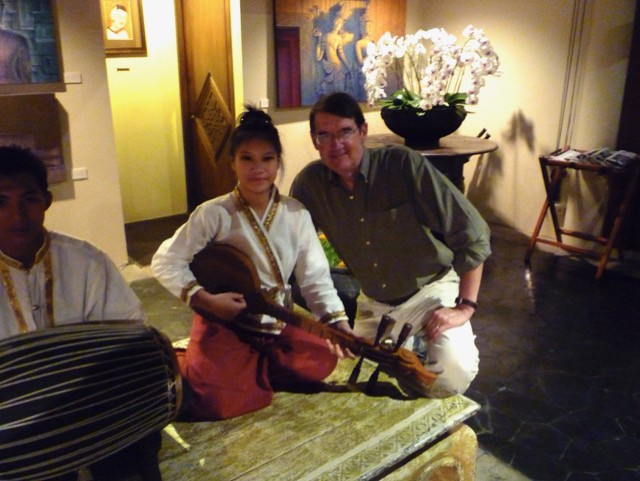
In South East Asia, he listened to a dinner hour trio which included a musician who played a traditional banjo variant with a wooden head.

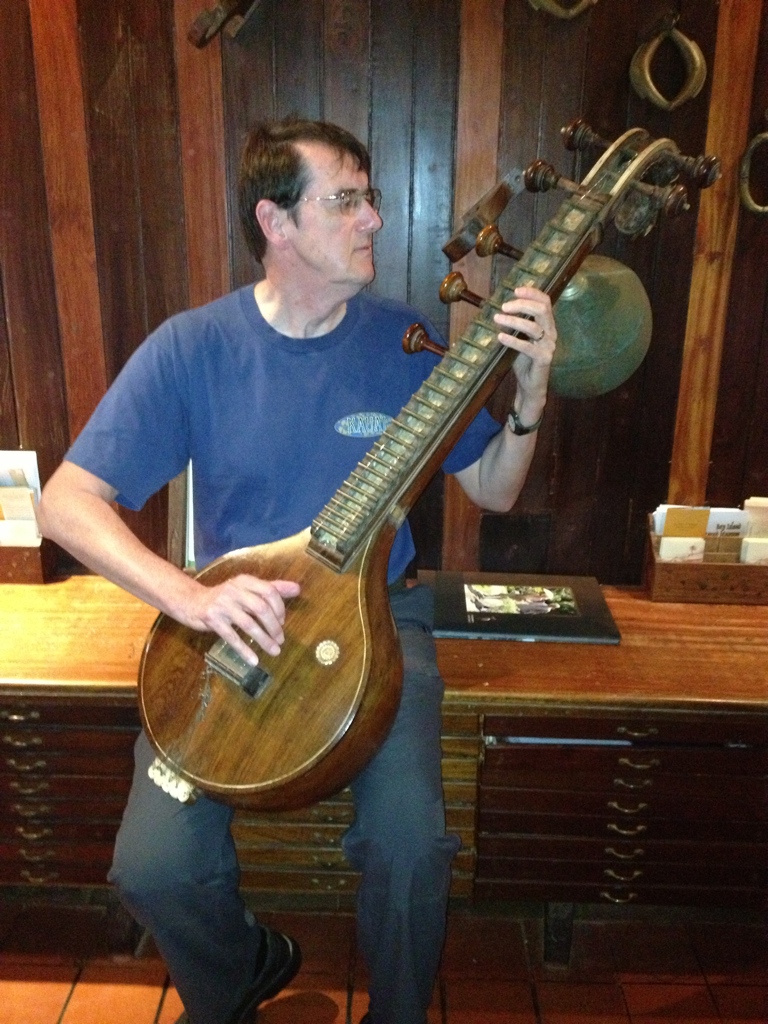
Traveling in the Middle East, the BRC picker played an oversized and almost unwieldy wooden instrument shaped like a banjo.

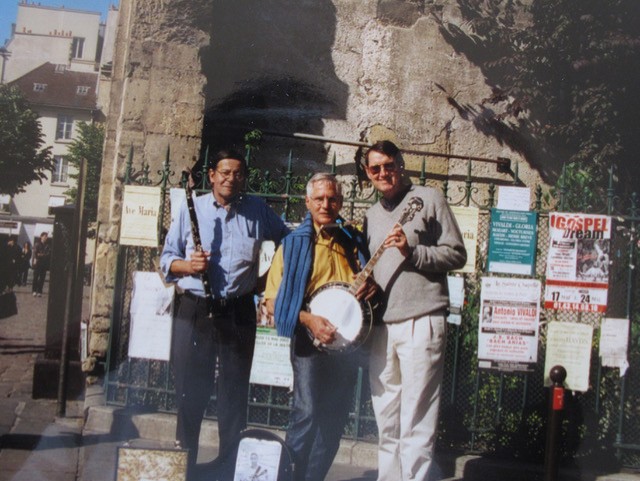
On a street corner in Paris, France, two banjo players overcome a language barrier and exchange musical ideas on the instrument.

Despite diverse musical discoveries observed in faraway places, the BRC 5-string picker is most at home when he journeys to the Lake of the Ozarks in southern Missouri for a weekly jam session with Bluegrass pals.

From the BRC:  Like the many iterations of the banjo, we are all cousins in one way or another.

.


Bio

Basis of the Bassist

March 14, 2026

A nearby rural community hall has been the site of a monthly square dance for many years. These Saturday evening assemblies begin with a sumptuous pot luck dinner carried-in by farmwives. While the buffet is set out, a white-haired championship fiddler (center right) gives a tutorial to a flock of eager youngsters who have brought their violins to the evening gathering to hone their skills on the instrument.

After the hearty meal and freshly baked desserts, the floor is promptly cleared, and the dancers assemble while the musicians tune their instruments. A caller instructs the couples to line-up, and the kinetic foot work begins to the pulses of the band.

On the evening above, the tempo of the dancing was driven by the BRC bass player (standing) with his amplified BC15E Jumbo Acoustic Cutaway C. F. Martin bass guitar that he purchased years ago. His instrument is outfitted with nylon tapewound medium gauge strings to give it a warm acoustic sound.  Years previously, he discontinued using the popular stainless steel flatwound and nickel wound strings on his Fender bass because these metal strings would sometimes growl against the metal frets.

Alas, Shakespeare is no stranger to the bass. His play Henry IV, Part 1, chronicles a conversation in a tavern in Eastcheap between Prince Hal and Poins. The young Prince exclaims, ” I have sounded the very bass string of humility.”

The above festive dance music goes on for hours with only an occasional break to give everyone a brief pause for refreshment. The whole evening is a unique vision from the pages of rural Americana.

From the BRC: Hopefully, Springtime is finding its way to your countryside.


Bio

Another Milestone…

February 28, 2026

The BRC banjoist surpasses another yearly milestone this coming week; and so he revisits, yet again,  his all-time favorite birthday card sent to him by a sibling years ago.

Below is an archival press clipping depicting the BRC musician jamming in his younger days at the McBaine Country Club, a nearby rural saloon not far from the shoreline of the Missouri River. Springtime flooding in the Missouri River Valley would not infrequently creep up to the premises, but the jammers convened on the upstairs second floor. In the below caption, the Stelling banjo was misidentified as a mandolin…alas. For more on the fated McBaine Country Club, please enter boogie in the search engine and tap the enter key.

From the BRC: Have a grand St. Paddy`s Day.

Bio, BRC Activities

Folk Music Memories

January 17, 2026

Some archival gig photos from the 1990`s were recently rediscovered in the BRC files, and one onstage snapshot includes a cherished gold-plated Stelling banjo. The instrument (seen below center) was a long awaited self-indulgent treat that the 5-string picker had acquired to celebrate a 50 year birthday milestone.

Back then, the BRC banjoist was a member of a folk music group called “Minimal Art” that performed at university events and community festivals as seen below where the BRC picker (far left) is playing a blond-toned mandolin. The BRC son (far right) is playing guitar.

The band repertoire in those days consisted of a lot of popular sing-alongs and bouncy blues tunes with harmonica accompaniment.

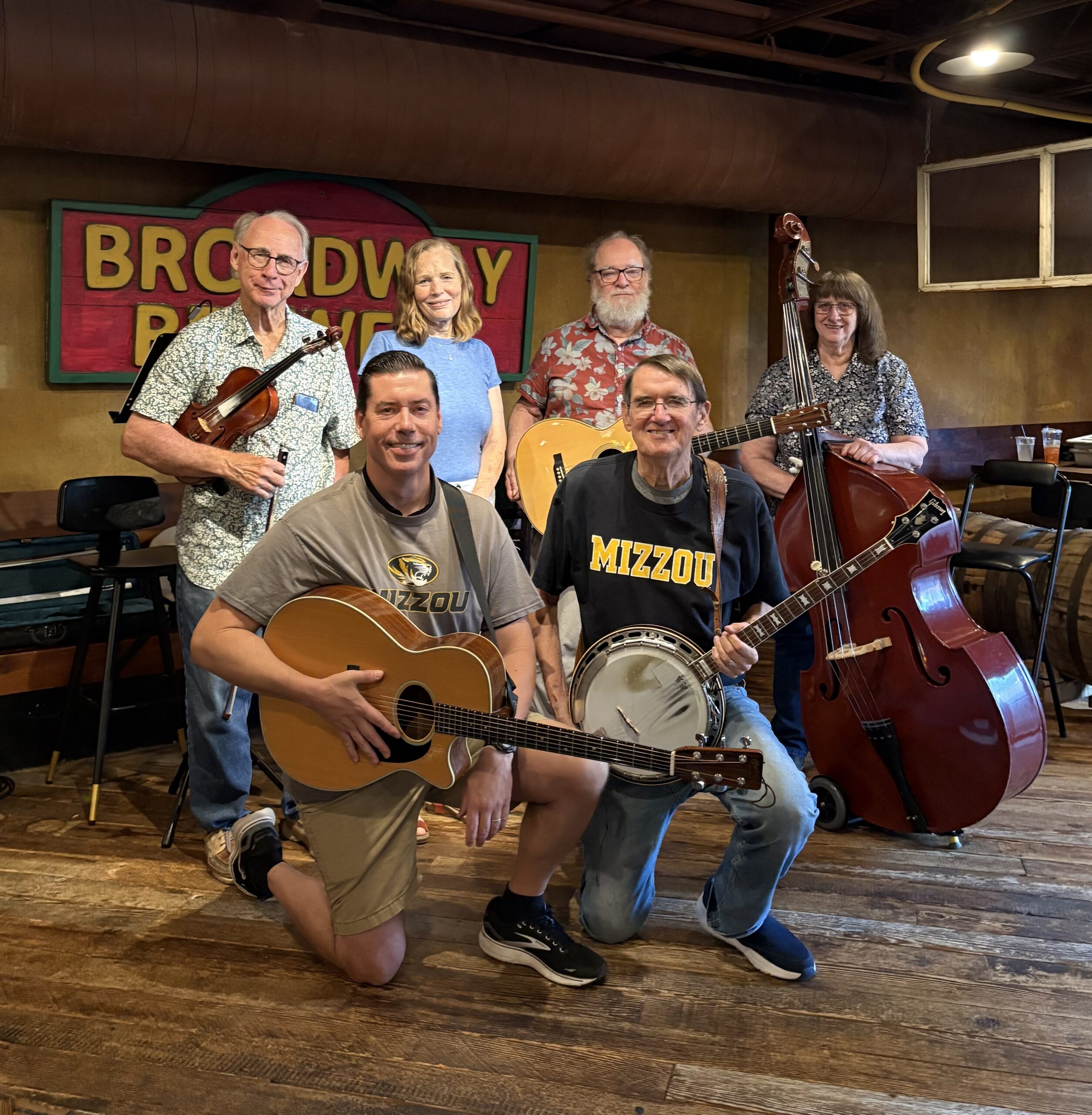
The well-seasoned Master Flower archtop banjo still resides prominently in the BRC collection and is played these days at Bluegrass jam sessions and Sunday afternoon brewpub performances.

From the BRC: Oldies are goodies.