Archives:

Jamming

The River Retreats Till?

August 17, 2019

The Missouri River flood of 1993 swallowed-up fertile crop fields, barns, houses, and towns. The BRC founder helped sandbag a levee around the Hitching Post saloon in Hartsburg to deflect the menacing flood waters surrounding the Sunday jam session venue. After Big Muddy later reluctantly returned to its banks, he wrote a tune “The Hitching Post Song” which became a wrap-up anthem for the jamming pickers and singers. The barkeep installed a poster behind the bar to celebrate preservation of the saloon and its weekly music session.bluegrass
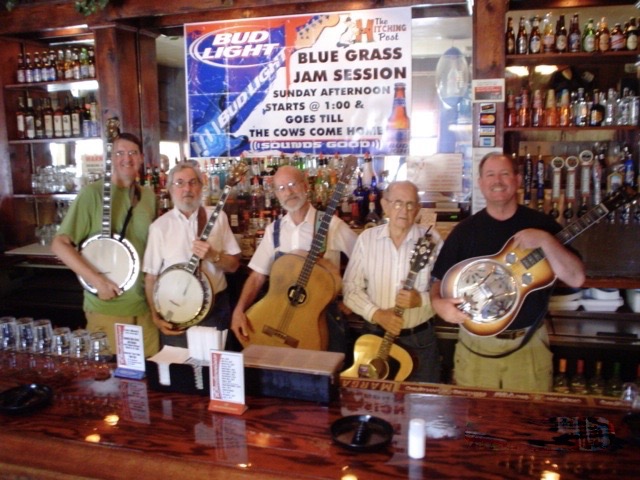
A few years later, the jam session moved up river to a new locale in McBaine, as “Lucy`s” tavern was adjacent to the city water plant and perceived to be beyond the reach of potential river spill-over. The Flood of 2011, however, submerged Lucy`s under nearly 6 feet of Missouri River flood tide. When the tavern was refurbished and thereafter re-opened, the musicians were photographed near a window that bore a bath tub ring-mark at eye level documenting the previous height of the murky waters.  When cyclists from the nearby bike trail would stop-by for a soft drink and ask about the recent flood level, they were pointed to the stained window.judi,gary, guys@lucy`s
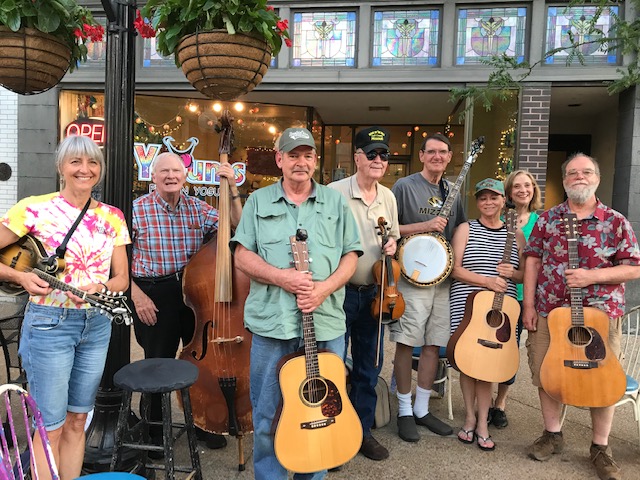
The springtime Flood of 2019 again swallowed-up large tracts of the Show-Me state. A few weeks ago, the Big Muddy finally shrunk below flood stage. Bluegrass jammers convened at a yogurt shop in our capital city located on a central thoroughfare aptly named High St. because the avenue is built on the bluffs safely above the Missouri River.IMG_2003
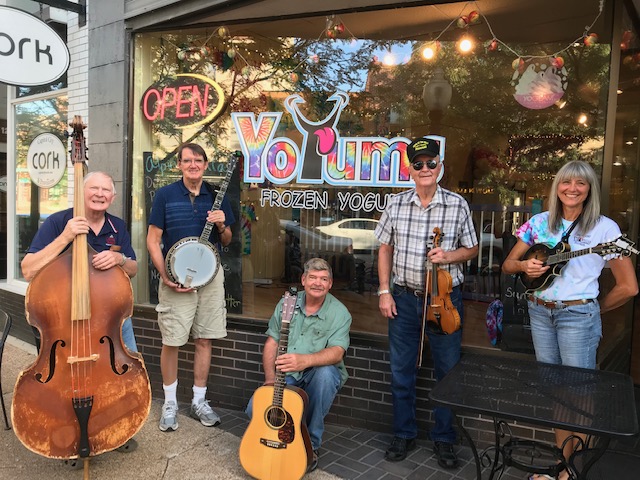
During the evening song fest, a listener passed-by and recognized the BRC founder from the 1990`s Hartsburg jam sessions and requested the Hitching Post Song from yesteryear. We sang:

Back in `93 the Flood came half through town/ But the sandbaggers turned the River `round/ God bless them all for this dry ground/ I’m riding home late from the Hitching Post tonight!
 

G&F Band

1995-2019=$25K

August 1, 2019

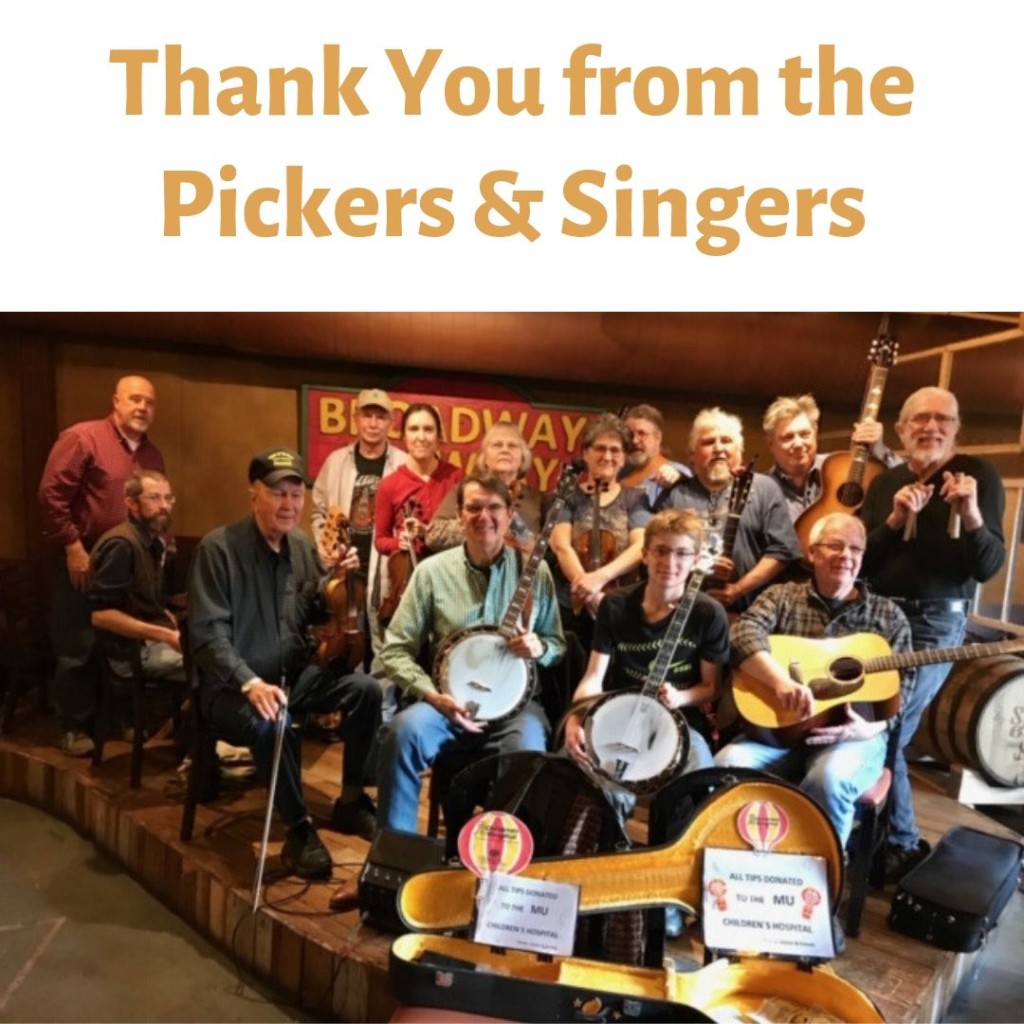
Twenty-four years ago, the BRC founder recruited a group of Bluegrass musicians to perform at an inaugural autumn Pumpkin Festival in a nearby farming village. All tips were donated to the local Children`s Hospital, and thus began what is now nearly a quarter century of jam sessions supporting the Children’s Miracle Network.

IMG_0653

Since then, the band has performed benefits at multiple venues in mid Missouri including saloons, street festivals, and gala dinners. On special holiday occasions, our vocal trio sings at the bedsides of hospitalized children. For the last decade, the `Gainor & Friends` pickers and singers have been graciously based at a family-friendly brewpub in our university town where we perform every Sunday for the brunch hour patrons. This last week, our total tip collections for the Children’s Hospital surpassed $25K in donations. 2

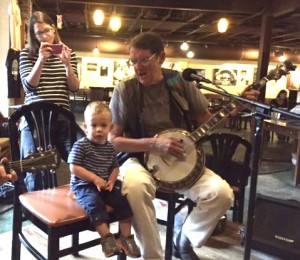
At the brewpub, curious children come up to the bandstand to study the musicians and dance to the upbeat music and song. The bandleader allows the youngsters to strum his banjo while smiling parents take photos and videos. The youngsters are then asked to raise their right hand and take the “Banjo Kid Pledge”  which is as follows: I promise to always do what my mom and dad say.UhBcORE4R8KjPt4dnuF7Sg_thumb_13846


Parents beam and the music goes on. Lucky us- what could be more fun on a Sunday afternoon?

Art Shows

Seafaring Stranger & the Smithy

July 15, 2019

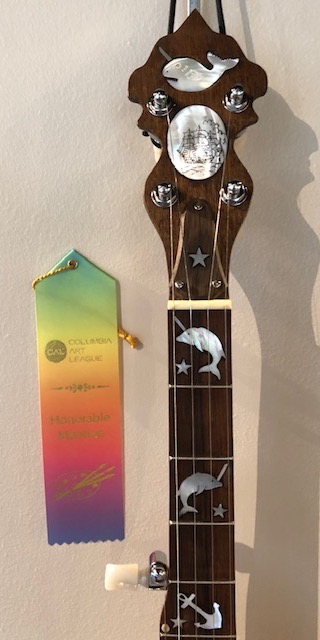
Clouded in mystery, the narwhal is the “unicorn of the sea” and first cousin to the beluga whale. Although a reclusive creature, the narwhal is a mammal that plies the Arctic waters in pods ranging from 10 to 100. It grows to 13-18 feet and can weigh up to 3500 pounds. Its swordlike tusk, which is actually a twisted tooth, can be sometimes 8 feet long and occasionally doubled in males. It is estimated that the population of this legendary deep diving (1300-4500 ft.) sea creature is 50K-170K.  Although not an endangered species, the narwhal is vulnerable to climate change. Its predators are polar bears that lurk at ice holes, and orcas that attack pods. Inspiration for a seafaring themed BRC 5-stringer came from a family trip to the island of Nantucket last summer and a visit to its Whaling Museum.IMG_0542

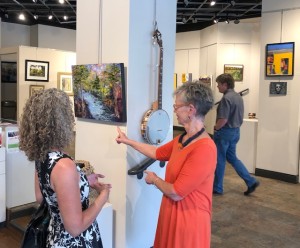
Amidst 113 paintings, sculptures, photographs, and mixed media works at the community Art League`s summer show, the BRC founder`s banjo “Seeking the Narwhal” hangs on a central pillar adjacent to his wife’s painting “River in the Woods.”  His spouse is seen discussing her oil painting with a curious patron while the banjo attracts little notice.

AIMG_0547t the gala opening reception, however, The Narwal garnered a ribbon and was promptly purchased by a local blacksmith who forges metal sculptures for Art League shows.
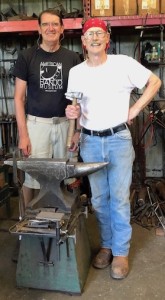


The blacksmith then invited the banjo builder and grandkids to a tour of his smithy for a metal art demonstration, and the skillful artisan is pictured below at his anvil with hammer in hand.IMG_0558

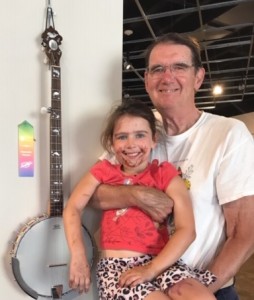
A BRC granddaughter, whose favorite sea animal is the narwhal, later celebrated the ribbon and metal shop tour with an ice cream treat.

IMG_1892 (1) (1)

Cell Perches & HVO

Double Siege

July 1, 2019

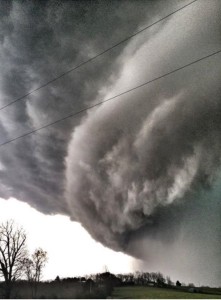
Just over a month ago, our nearby capital city was besieged with a tornado followed promptly by flooding from the rain-swollen Missouri River. Fortunately, there were no fatalities from theses calamities, but the townspeople still reel from the exhausting impact of two almost simultaneous natural disasters and troublesome resurging water levels of the river.IMG_2624


On the night of the tornado, a Facebook photo captured the roiling tumult of a malevolent tornado-spawning cloud as it churned across the outskirts of the city.  Shortly thereafter, the cresting Missouri River breached its banks and spilled into the midtown area and over miles of surrounding floodplains.

IMG_0502


With the capital building dome seen faintly in the distant mid photo, sandbags stand guard over unpredictable flood waters that threaten an off ramp approach to the Jefferson City Bridge near the submerged municipal airport.

The flood tide finally relented and started to slowly ebb weeks later, and folks began to recover from the storm damage. Bluegrass musicians gathered at a capital city yogurt shop for a sidewalk summer jam. Children and passers-by applauded the cheerful homespun music and harmony singing, and our clogger instructed dance steps to those daring enough to kick-up their heels.IMG_1871

Heartened by the rebounding festive community spirit, an on-looking citizen exclaimed,  “This is what Jefferson City needs!”

Antique Banjos

Motto Revisited

June 17, 2019

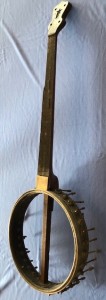
The recent `No Knot` 5-stringer restoration pointedly reminded the BRC founder of his website motto: All Banjos Deserve a Second Chance. Postponing plans to build a banjo for an upcoming art show, he earnestly set out to restore a dreary and deeply tarnished antique instrument that had been languishing for months under a table in the workshop.IMG_0462

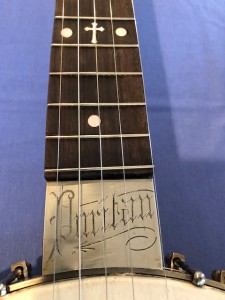
The fretboard and tuning pegs were gone, mother of pearl inlays in the peg head were fragmented or absent, no remnant of a head remained, and much of the hardware was pitted with rust. The base of the neck had a smudged plaque embossed with ” Puritan.”

Research revealed that this circa 1895 banjo was likely made in Chicago by the Lyon & Healy Company that also marketed similar 5 -stringers with plaques labeled “Mystic” or “President” and sometimes  “Encore.” Unique structural features at the neck-rim junction indicate that this model was a student/intermediate level instrument.

IMG_0476


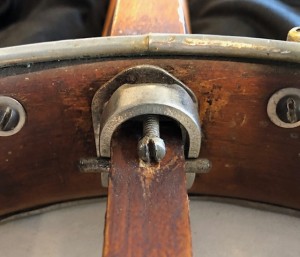
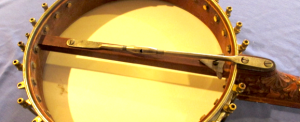
In comparison, some high end 5-stringers of that era had the familiar neck brace-cross pin used to stabilize the dowel stick-pot junction as seen in this circa 1900  banjo. It is not known when this mechanically dependable device was invented, but it is ubiquitous today and bears no patent data.


Less expensive turn of the century banjos, as seen in this archival picture from the BRC collection, frequently had only one or two wood screws across the pot or dowel stick-neck interface. A supplemental stout metal brace spanning the construct was not ornamental but integral in stabilizing the junction.

Untitled copy 3


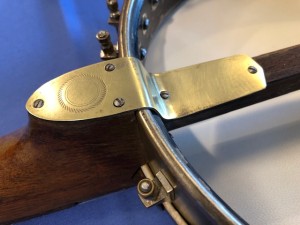
The “Puritan” had a well-secured and engraved buttress plate made of brass that reenforced the two wood screws hidden below it clasping the pot to the heel of the neck. IMG_0533


The inner wooden pot was  “spun over” and clad with a German silver (nickel , copper, and zinc alloy) outer rim. Some collectors admire this shiny antique feature and the tone it reportedly imparts to the banjo. A new rosewood fretboard was fretted and installed, and it was modestly inlayed with mother of pearl. The recessed “Puritan” plaque at the base of the neck offered a profile that looks like a forerunner of the modern day `scooped` fingerboard.IMG_0528 (2)


Clawhammer enthusiasts would probably concur that all banjos, especially an open-back treasure like this one, deserve a second chance.