Archives:

BRC Events

BRC Celebrates new DR&D and Success of “Peace Dove ” banjo

November 6, 2014

The Banjo Rehabilitation Center is pleased to announce the designation of a Director of Research and Development  whose first task will be to refine our prototypical and successful “Peace Dove” 5 stringer popularized on eBay. In addition to his hands-on workshop responsibilities, the new DR&D will serve as a Member-at-Large on the BRC Board of Directors alongside his cousins.Roland:Dove

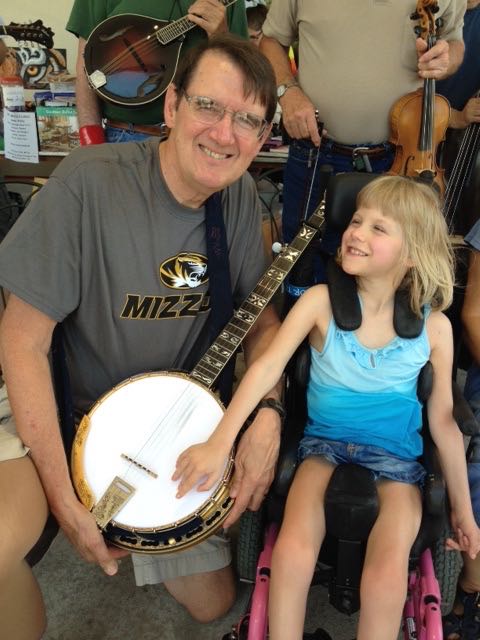
The new Director is pictured is this recent file photo , as he acquaints himself with the current iteration of the Peace Dove instrument.

No strangers to the BRC, his parents can be seen (left and right of center) on the May 22, 2011, earlier home page post “Introducing the Research & Development Team.” Coincident with this newly established R&D leadership position, the BRC also readies itself to celebrate the upcoming milestone of 400K visits to our website which should transpire in the next few days.  With Thanksgiving only weeks away, our workshop staff is immensely grateful to our faithful readership and mailbox correspondents.

All blessings to you this Season of Thanks.

P.S. Check-out the BRC `Peace Dove` banjo offered on eBay November 9-16. (sold)

The new owner appraised, “Many hours of loving work in this banjo. It is beautiful!!! I am well pleased.”

Bio

Ode to a Banjo Legacy

October 12, 2014

While traveling to Boston last month, the BRC founder set aside an afternoon to again visit with instrument designer, award-winning clawhammer musician, and banjo uber scholar Ed Britt. The two pickers share a common love of Ode banjos that were manufactured in Boulder, Colorado, from 1961-1966. 64 ode


Included in Ed`s marvelously  extensive collection of vintage 5 stringers, and pictured below cradled gently in the BRC founder`s hands, is the ornate Muse banjo (right) featured half a century ago on the cover of the 1964 Ode banjo catalogue-  held by its owner Mike Ford. This same image was pictured on the back cover of the 1963 Ode catalog.

photo - Version 3


Ed is holding  a special edition Martin guitar  for which he designed the elaborate mother of pearl inlay.  The ornate top of this 00-45 Custom is shown in Dick Boak`s book ” Martin Guitar Masterpieces”– as a full page photo, on page 12. Ed is cited on pages 10 and 11. The pearl work was cut and inlaid by Britt`s longtime friend, Dave Nichols, of “Custom Pearl Inlay.” Dave also did the highly-figured inlay on the first Martin Custom D-45, for Neiman-Marcus, in 1979 (shown on page 11) which established a precedent for decorative high-end guitars.


Because of his encyclopedic fund of knowledge, Ed is frequently sought online as a resource and arbiter of banjo history issues, and it is fabled in chat rooms that he has forgotten more factoids about banjos than most folks have come to know.  The two Ode banjo fans spent the afternoon admiring Ed`s instrument collection which, incredibly, contains the Ode banjo imprinted with inaugural Serial No. 1.  As a threesome, they jammed with Ed`s masterful Scruggs-style picking pal and fellow recording artist Don Borchelt. What better way to spend an autumn afternoon in Beantown?

Vega Martin Stories

Vega Vox V: The Vega Martin Apogee of 4 String Banjos

October 6, 2014

Vega Vox models I-IV, high end plectrum and tenor banjos, can trace their Boston beginnings back to the Jazz Age 1928 Vega catalogue. The penultimate Vega Vox V was designed for banjo wizard and consummate showman Eddie Peabody (1902-1970) in the late 1960`s.  Although the American Banjo Museum in Oklahoma City does not have a rare Vega Vox V, it has a Model IV donated by Peabody`s son George. The glitzy ” Vox-Ultra V” model first appeared in the 1972 Vega Martin catalogue as an end note on a back page devoted to “Special Models”. In the 1976 Nazareth, PA, product brochure, the Vox-Ultra V plectrum/tenor banjo occupied a full page with its photos and descriptor. IMG_0198 - Version 2

This flashy 4 stringer featured an engraved and hand-painted deep resonator with similar appointments on the peg head. It had a brass tone ring and engraved chrome armrest. The Vega Vox V sported a gold plated tension hoop and flanges bejeweled  with 24 rhinestones. Engraved mother of pearl inlays figured the fretboard, and still more rhinestones studded the rococo peg head.IMG_0200

The Vega Vox V banjo SN 130316, shown here, was manufactured 1971-72. There were only a handful of these spectacular instruments ever made, and this one was rescued from overseas in an exhausted condition in recent years.


It was returned stateside to be professionally and meticulously restored, and it is one of the few such marvelous relics extant.IMG_0201 - Version 2


Deering now owns the Vega brand and is contemplating re-introducing the Vega Vox banjo series. Vintage Vega Vox models I-IV  were manufactured in Boston for decades and not infrequently come-up for sale online. The Vox-Ultra V, however,  will remain an endangered species until Deering resurrects it. For a detailed history, click-on the above Vega Martin Banjo Info header and scroll down the mailbox to post (#26) for Dr. Ron`s extensive Comments, and the BRC thanks him for the historic details and photos.


READER QUIZ:  Can you  name the model of this banjo? Click-on the `4 Comments` immediately below regarding the 1979 (post Martin) Vega catalog cover and a banjo photo from the BRC mailbox and enjoy.

 PicturesIMG_3761


Cell Perches & HVO

Banjo Education: An Art Form

September 26, 2014

For decades, the BRC founder has frequented museums, art festivals, and sculpture gardens hunting for a banjo-themed statue. The long search ended this autumn at a Rocky Mountain wedding. Near the entrance of the Planet Bluegrass music park and (wedding) events center in Lyons, Colorado, quietly stands the magnificent bronze statue “Passing It Along” by American sculptor Dee Clements (click to enlarge).photo


This brilliant award winning artist has also done bronze performance works entitled “The Cellist” and “The Violinist”.


Banjo education has been studied in art for more than a century. Born in Pittsburg, PA, limner Henry Ossawa Turner (1859-1937) was the first Afro-American painter to gain international acclaim. The son of a mother who escaped from slavery to the North, he lived most of his life in Paris.

Tnner banjo


During a brief visit to Philadelphia in 1893, he painted the iconic image “The Banjo Lesson” (Hampton University Museum, Virginia). So often depicted, banjo skills are handed-down as a family tradition.

.


Like Turner, Mary Cassatt (1844-1926) was born in Pittsburg and emigrated to join the Impressionists in Paris where she hoped a female artist would find greater acceptance. Her full length painting “The Banjo Lesson” (Brooklyn Museum of Art) was completed in 1893.

cassatt


A more intimate portrait version of “The Banjo Lesson” (Virginia Musem of Fine Arts, Richmond) was completed 1893-4 and bears her signature on the canvas. Cassatt also painted the “Girl With a Banjo” in  1893-94 which resides in a private collection.

Music instruction is an artful endeavor, and the BRC salutes all banjo teachers everywhere!

Vega Martin Stories

Bobby Joe Fenster: A Myth Unto Himself

September 12, 2014

In 1967, towards the end of the folk music revival era, C.F. Martin Co. mirthfully invented a geeky guitar endorser who they named Bobby Joe Fenster. The Vega Martin Pro-5 banjo was quietly re-deisgnated as the “Bobby Joe Fenster” model for a few years until 1972 when the tongue-in-cheek ad campaign was retired. 14372-1404361042010Yellow stickers enscripted with the BJF name were adhered to the inner rim of those Pro-5 banjo pots , and these rare birds are occasionally  sighted on eBay.

Over the intervening decades, a small mythology has evolved around this humorous footnote in Martin lore. It has been suggested that comedy actor Eugene Levy, supposedly a favorite comic of the Company  vice-president, invented a skit character named Bobby Joe Fenster, and so C.F. Martin Co. adapted this imaginary persona and name for the ads. Copyright infringement notwithstanding, there is no mention of BJF on the Wikipedia page devoted to Eugene Levy or anywhere else online. In the 2003 hilarious mockumentary film “A Mighty Wind”, Levy skillfully portrays a nerdy folksinger named Mitch Cohen. This book-wormish BJF look-alike prompted some enthusiasts to muse that the Canadian actor Levy is actually the guy in the old BJF ads, despite the photographs being taken over 35 years prior to the movie.Image

It appears Levy is not BJF, and that there was more than one model who sat for the ad photos.Bobby.Joe.Fenster

getimage (1)Look at these pictures and decide for yourself-

In the  Boston pre-Martin days, Vega banjos were endorsed by 5-string legends Pete Seeger, Earl Scruggs, and Sonny Osborne. Only the long-neck Pete Seeger model transitioned into the 1972 Vega Martin catalogue, and it was replaced by the No. 2 Tubaphone XL in the 1976 product list.

It was, nonetheless, a whimsical and endearing moment in the too-short Vega Martin banjo epoch. Although C.F. Martin now has over 80 special edition and signature model guitars, the only banjo endorsee established during the 1970-1979 VM era was the uniquely amusing and fictitious Bobby Joe Fenster. What other stringed instrument endorsee is so enshrined in mystery and shrouded by the mists of Time?

P.S. To learn more about one of the two above photo models, please click-on the below link and scroll way down to Comments(1).  Since this posting, the identifying data have been deleted from the below Lehigh University Digital Library graphic. Sorry (Ed.).

http://digital.lib.lehigh.edu/cdm4/beyond_viewer.php?DMTHUMB=0&searchworks=cat22&ptr=014210

After visiting the BRC website in the Spring of 2015, the guy in the bottom and upper left photos graciously contacted us to confirm that the data footnoted in the above link was factual. The identity of the fellow in the upper right picture remains unknown. Let`s hope that he visits the BRC website someday, and we will hear from him. Barry