CD songs, Jamming

A Salamander & A Handful Banjo

September 26, 2020

If you’re looking for a thrill/ It’s at the Salamander Grill

Where you can get your fill of/Bluegrass pickin` and chicken

Down Home Country Fried!

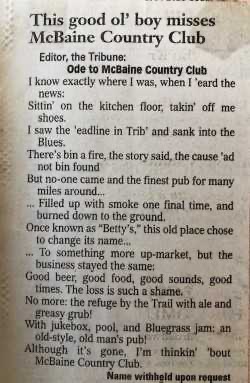
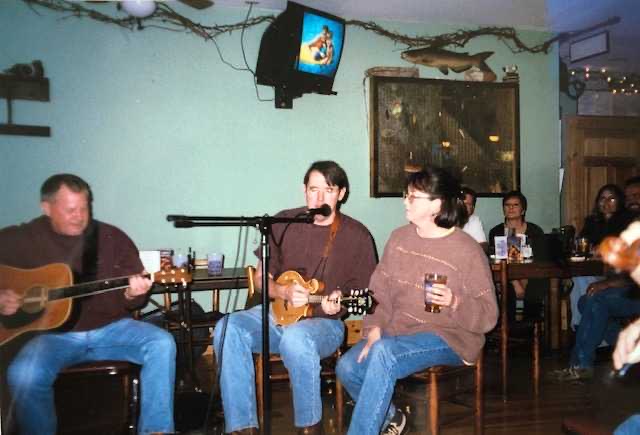
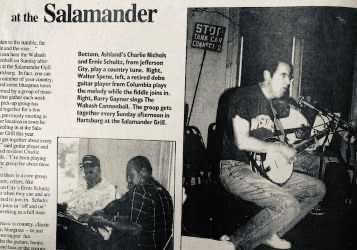
When the Hitchin` Post saloon was sold, the Sunday afternoon Bluegrass jam session took up residence at a newly opened and freshly renovated venue only a few doors down the street. The owners graciously welcomed the pickers and the patrons that followed our music there, and cigarette smoke was not an indoor environmental issue in the spacious family style eatery. It became a popular Sunday luncheon locale for many neighboring families. Although handy on the banjo, the BRC founder would sometimes play mandolin when a song called for it.

The local press took an interest in the revitalized music scene in the village of Hartsburg, and the Grill owners asked the BRC founder to record his original tune “The Salamander Grill” for a radio advertisement. With his son on rhythm guitar, the banjo builder recorded a stanza of the song with the above refrain as the catch-phrase. In the below sound file of this up tempo theme song, all the instruments and vocals were multi-tracked by the author on his initial CD to benefit the Childrens Hospital. Enjoy.


From the “Hartsburg Anthology- songs mostly about Missouri” copyright 2004.

A Handful Banjo

For the autumn 2020 juried exhibit, the community art league tasked its members with the following directive: The tradition of the human figure in art continues to inspire and challenge artists today. Whether abstracted or realistic, we experience the figure in art both visually and physically. We want to see your contemporary take on interpreting the ancient practice of recreating the figure.

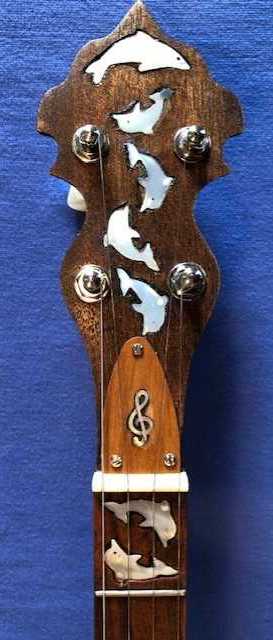
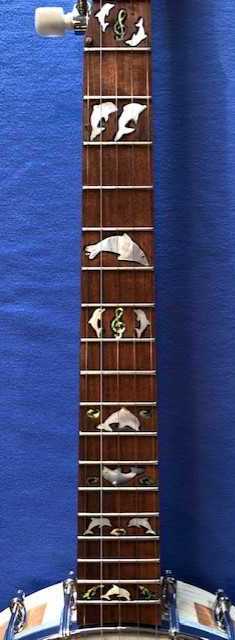
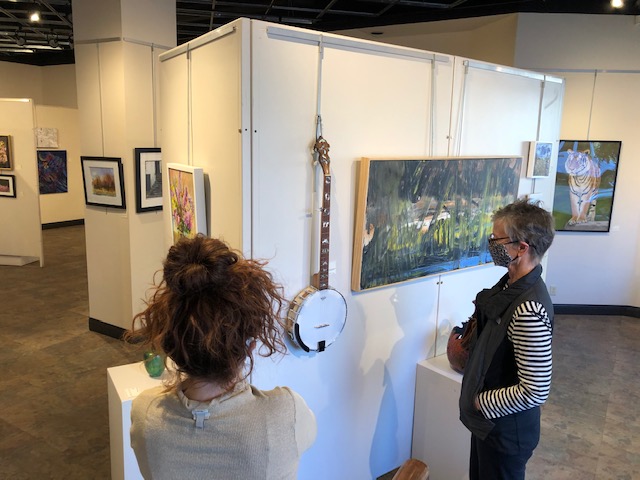
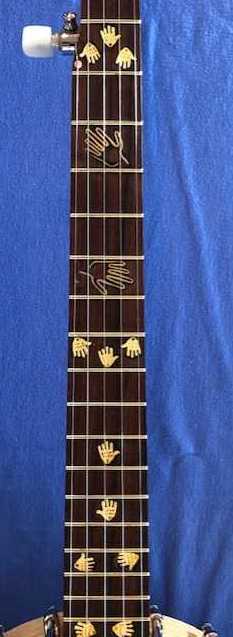
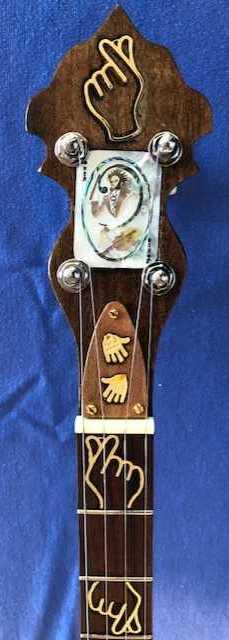
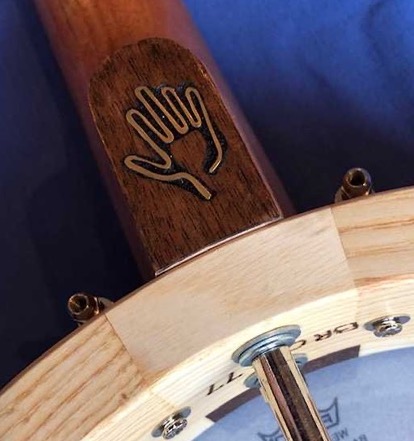
In response to this assignment, the BRC founder built the “Play Your Hand” banjo which was accepted and exhibited in The Figure art show among 56 other entries of photographs, sculptures, watercolor and oil paintings, mixed media abstraction, wood, metal, and fiber works- each reflecting the human form.

The human hand is a marvel of communication second only to the face in its ability to convey emotion. We give and take with the hand. We wave a greeting and bid farewell with it. A handshake confirms connection, and fingertip kisses are blown to departing loved ones. Holding up two fingers in a V is a sign of peace, and a tightly clasped fist held overhead is a symbol of protest. We pointedly accuse with the hand, and both are held overhead to indicate surrender. A salute offers recognition of office, and a circle made with the thumb and index finger is the universal emoji for OK. Fingers are crossed for good luck, and flattened palms are pressed together in prayer. We wring our hands when worried and flap them in frustration. The extended index finger in front of pursed lips is a non verbal request for quietude. Historically, thumbs-up is a positive indicator of affirmation, and thumbs-down is negative. Holding up the palm vertically is a signal to stop, and a firmly clenching hand is a barometer of anger.  We affectionately caress loved ones with the hand, and in some traditional cultures, kissing the hand is a gesture of deferential respect. Sculptors and painters fashion their works by hand while silently crafting their artistic vision. The hearing impaired communicate with a vocabulary of sign language. A choir conductor gestures wordlessly to guide a chorale, and an orchestra makes music with its fingertips following the direction of the maestro`s hand-held baton. 


Bluegrass musicians spend endless hours honing their craft, and many banjo players wear fingerpicks to amplify their tonal palette (enter “picks” in the homepage search engine). According to 5-stringer lore, Earl Scruggs estimated that 10,000 hours of practice were required to master a musical instrument.


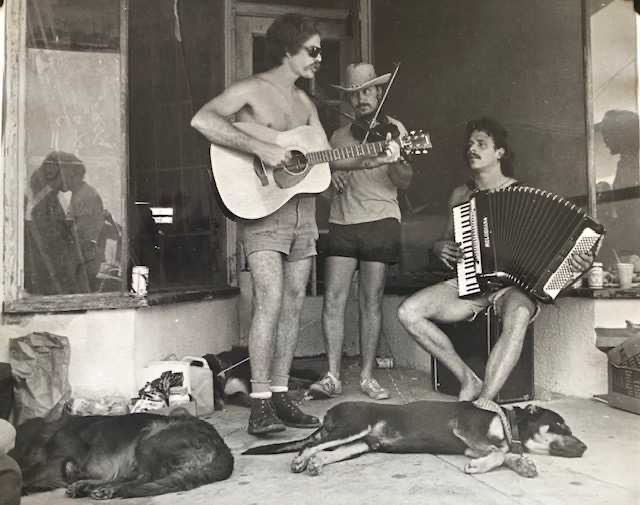
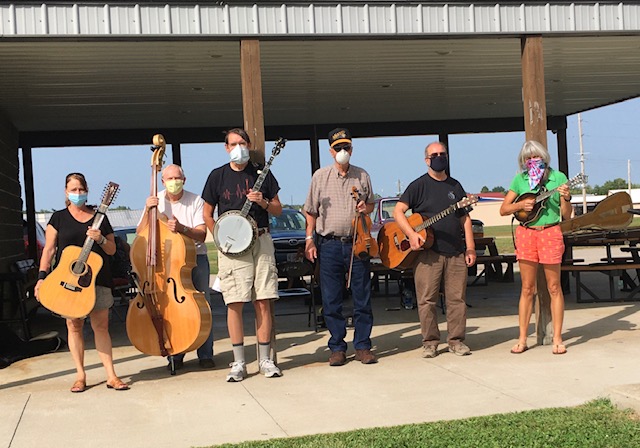
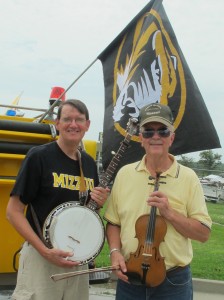
At a festive outdoor gig for the Children’s Hospital, the BRC founder poses with his fiddler who lost a finger in a severe power saw injury some years ago. After staged and complex surgeries, the fiddler devotedly rehabilitated his hand and retrained it to full musicianship.


From the BRC: Be well, practice hand hygiene, and keep on picking.


CD songs, Jamming

Ridin` Home Late

September 12, 2020

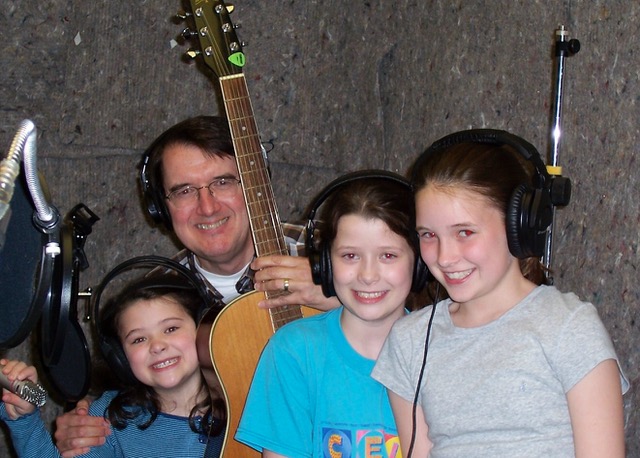
Growing up in the Show-Me state, our children flourished as teenagers. The older sister was an artist, and the younger sister was a scholar. Mom bought our son a guitar, and he soon conquered it as well as the cello for school orchestra. His dad reactivated dormant banjo skills, and the lad taught his father how to play bass. Before long, they were performing at gigs together.

The Hitchin` Post, a bottomland saloon near the Missouri River, was choked with patrons and cigarette smoke on Sunday afternoons when the Hartsburg pub hosted its weekly Bluegrass jam session. The father-son duo not infrequently played back-up for fiddlers, pickers, and singers.

The BRC founder became a regular banjo picker at the pub, and he soon polished-up his knack for tune smithing by penning “The Hitchin Post Song.” It became a wrap-up anthem at the conclusion of Sunday jam sessions when all assembled adjourned to go “ridin` home late.” He collected this and other newly written tunes into a file that he called the “Hartsburg Anthology- songs mostly about Missouri ” which became the title of his first CD recorded to benefit the Childrens Hospital (Copyright 2004). On the below sound file, all instruments and vocals are performed by the author. Enjoy.

It has been decades since the last Hitchin` Post picking session in Hartsburg, and BRC life is now populated with grandchildren. In recent years, a new jam scene has sprung-up a only few miles down the Jeff City Rd. at a yogurt shop in our state capital of Jefferson City.

In this pandemic era, however, the musicians practice precautionary behaviors of outdoor picking on the sidewalk in front of the shop, mandatory masks, and safe distancing.Songs from the “Hartsburg Anthology” CD are performed when requested by listeners during these evening jam sessions, and we disperse after sundown when all assembled adjourn to go “ridin` home late.”

From the BRC: Be safe, be well, keep on picking.

Bio, CD songs

Flood & Fest & Frailing

August 29, 2020

In the Spring 1993, the swollen Missouri River rushed over it banks flooding farmland, towns, and cities, and inflicting colossal damage everywhere in its muddy path. About a mile from the river bank, the flood waters surged into the bottomland village of Hartsburg. With the help of farm families, prison volunteers, National Guard, and concerned neighbors, a huge levee was hurriedly erected in the middle of the town with the Hitchin` Post saloon, a Bluegrass jam session venue, just barely on the dry side of the sandbag wall. In a photo taken the morning after the levee successfully stopped the advance of the murky 9 foot deep floodtide, the BRC founder stands up to his ankles in mucky water where he stacked sandbags on the previous day of back breaking work.

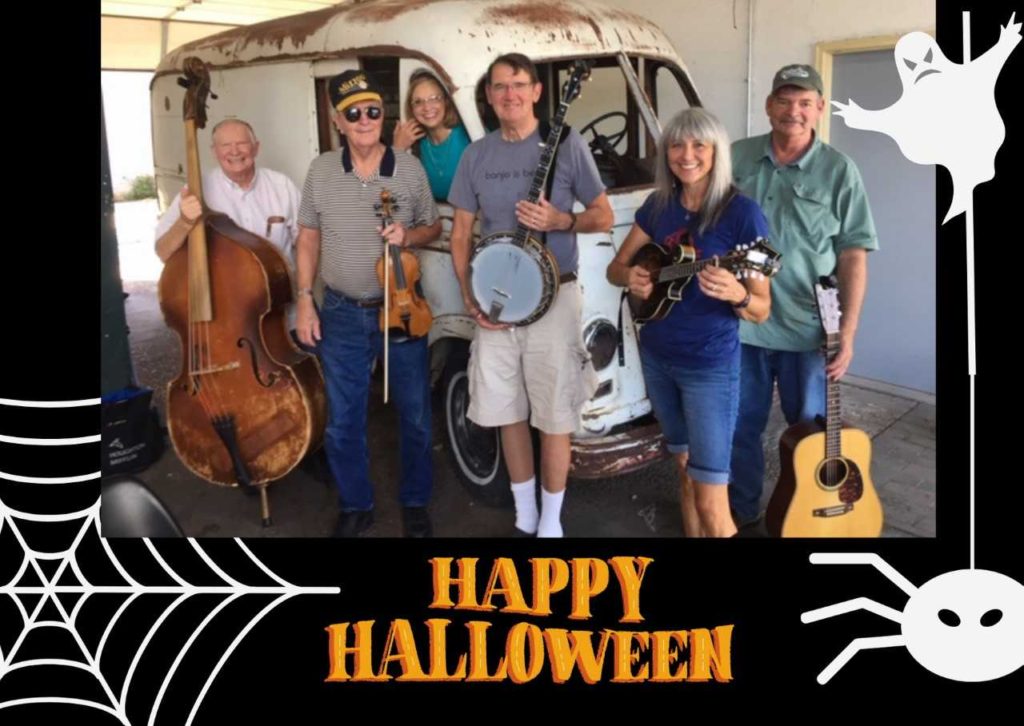
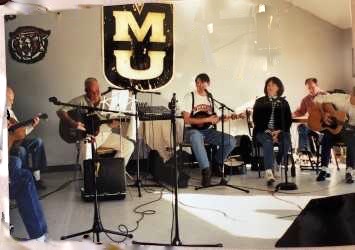
Some townsfolk relocated as the flood waters very slowly subsided, but a bottomland farmer was heard to pledge, “River or no river, we`re staying.” The Hartsburg community recovered, and despite minor flooding in 1995, they soon inaugurated an annual autumn Pumpkin Festival to celebrate the town’s resilient agricultural heritage. The BRC founder`s band performed benefits for the Childrens Hospital at the several of these sunny autumn festivals as pictured below (son and father/mandolin far left), but this year`s fest has been cancelled because of the pandemic.


The BRC banjo builder chronicled the `93 Missouri River flood and construction of the sandbag “Hartsburg Wall” in a song with the melody adapted from “Richmond Blues” by T. C. Ashley as recorded by the Smithsonian Institute in 1961.


From a 2004 CD, enjoy this tune in the below sound file in which all music and vocals are performed by the BRC author (copyright 2004).

The clawhammer technique heard in this tune was called “frailing” on Pete Seeger`s instructional album recorded in 1954 that the BRC founder and his older brother checked-out of the local library in 1960 to decode the mysteries of banjo playing. The historic LP “How to play the 5-string Banjo” offered a new vocabulary of hammering-on and pulling-off. The older brother, a seasoned Dixieland jazz musician in college, proposed that it would be more efficient to learn to clawhammer with the ring finger rather than the index digit as Pete recommended on his LP. This would allow the picker to seamlessly shift from frailing to 3 finger Scruggs picking ad lib.

A plastic pick is worn backwards on the ring finger and is stabilized with white electric tape. The thumb pick essentially precludes double or drop-thumbing. Note the subtle clear patch of packing tape protecting the head from thumb pick-tip abrasion. As two-thirds of a banjo`s architecture is a drum, clawhammering with a plastic pick enables banjo volume to penetrate a multi-instrument Bluegrass band or jam session with a percussive galloping rhythm that propels the music. The pre-war Mastertone banjo (photo left) was purchased from progressive NYC banjoist Roger Sprung in 1963 by the older brother who graciously gave it to the BRC founder about 25 years ago.

The pot and resonator were made at the Gibson factory, 225 Parsons St., Kalamazoo, Michigan, in 1928; and the classic “bow tie” RB-250 neck is from the 1950`s. Gibson no longer manufactures banjos, and the “Mastertone” trademark was recently acquired by Gold Tone.

From the BRC: Be safe, follow hygiene rules, keep on picking.

CD songs, Vega Martin Stories

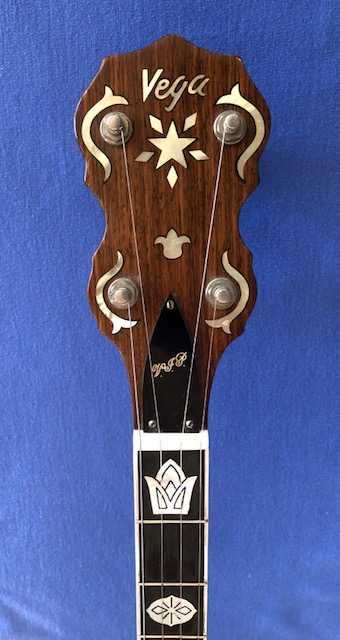
A Long Way & Long Neck- Vega Martin

August 15, 2020

In his high school days, the BRC founder dabbled in songwriting and performed his tunes at area talent shows. His first banjo was a Pete Seeger styled long neck that he built from parts procured at a fire sale. During his undergraduate years at a college in Massachusetts in the mid 1960`s, he performed at small venues like coffee houses, a pizza joint, and once with a rock band (the neighbors called the local constabulary to quell the noise).

Playing finger picking styles on both the banjo and guitar, supplemented with occasional harmonica, he was invited to demonstrate these techniques on the college radio station.


Attached is a sound track of the song “A Long Way” that he penned 1967 and did not recorded until 2005 when he made a CD entitled “Songs Mostly about the Heartland- a bonesetters tale” which was sold as a fund-raiser for the local Childrens Hospital. A folksy tune with lots of fun counterpoint, all the multi-tracked instruments and vocals are by the author (copyright 2006).


01 Track 01 15 (2)

From the BRC Vega Martin Mailbox:

Hi there! Thanks for a wonderfully entertaining and informative website, I have owned (for years) a Vega long neck by Martin, serial #1807. It is in excellent condition, and I have enjoyed plinking on it for 40 years. I would love to know more about it, and possibly it’s current value. I would be glad to send some photos – is there an email to which they could be sent? Again, many thanks for your efforts on the banjo world’s behalf. B.B.

From the BRC:

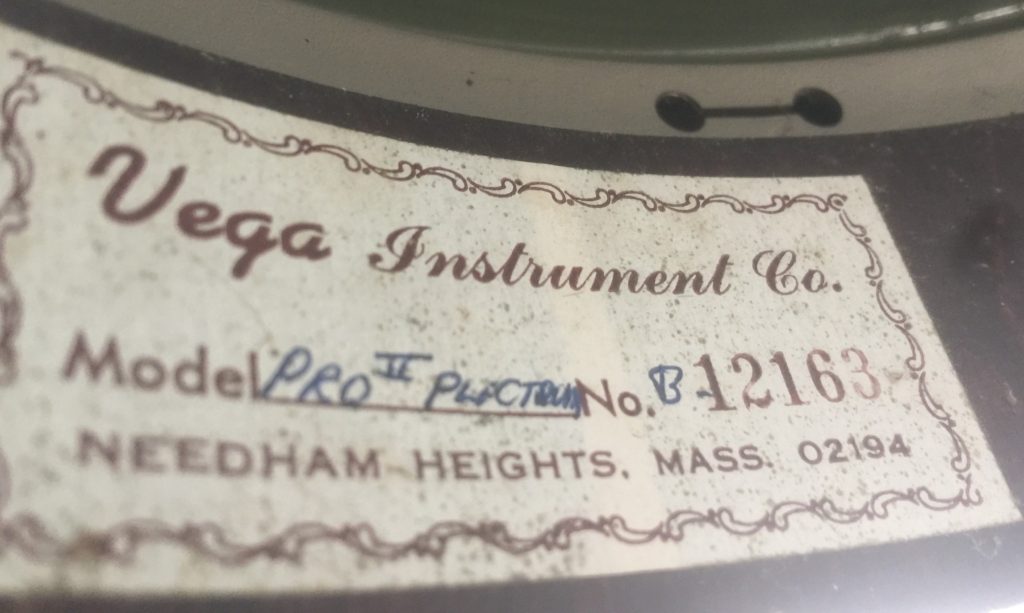
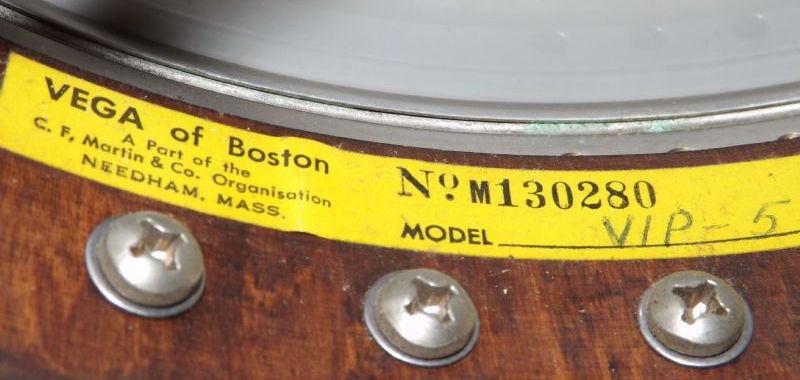
Dear B.B.: Thank you for your kind remarks and detailed photos of your Vega Martin long neck 5-stringer. Your banjo serial number 1807 was built by C. F. Martin in Nazareth, PA, in 1977. Although styled like the iconic “Pete Seeger” long neck design (PS-5), it is actually a “No. 2 Tu-Ba-Phone XL” model or abbreviated as T2XL in the C.F. Martin shop logbook. Per my files, the Pete Seeger model first appeared in a Vega flyer from Boston in 1961. Apparently, Seeger`s endorsement agreement with Vega was very casual.  After the sale of the Vega brand to C.F. Martin in 1970, the Seeger model appeared in the 1970 and 1972 Vega Martin catalogs but not in the 1976 catalog where it was replaced by the similar “No. 2 Tu-Ba-Phone XL” long neck. It is not clear why the gentlemanly Seeger withdrew his endorsement, but enthusiasts proffer that Pete believed the long neck banjo should stand on its own merit and not his name. C.F. Martin manufactured only 25 of the T2XL instruments, and this model was last advertised in a CFM flyer circa 1978. The No. 2 Tu-Ba-Phone XL featured appointments adopted from the Boston era Vega No. 2 banjo of yesteryear with a 3 piece maple neck, adjustable tension rod, fingerboard bound in white, and nickel-plated metal parts. The modern tube-a-phone tone ring has so-called dog bone or barbell apertures, but the #1807 banjo has vintage single hole apertures in the tone ring which is probably a left-over part from Martin`s discontinued Pete Seeger (PS-5) line. The large diameter tension rod is likely a Boston factory part inherited from the Vega inventory. 


The Martin Company sold the Vega brand overseas in 1979, but the franchise returned to the USA when purchased by the Deering Company in 1989. The Vega classic Pete Seeger long neck model from Boston in the 1960`s is a collector`s item and worth around $2.8K- 3.5K these days. Although a rare and beautifully crafted instrument, my estimate is that the T2XL is worth around $1.7K nowadays depending upon condition. Thanks again for your correspondence and photos enabling the T2XL story to be shared with the BRC readership. With appreciation, Barry

P.S. Although a Bluegrass picker, my daily practice banjo is an open back long neck Ode because of its mellow wife-friendly tone. 

From the BRC: Be safe, observe social distancing, keep on picking.


Art Shows, CD songs

Sweetest Flower of Them All

August 1, 2020

Bluebirds in the dogwood/Sing her stately praise

Jewel of the Ozarks/A floral gem bouquet

Although the dogwood is the State Tree of Missouri, the White Hawthorn Blosssom is the official Show-Me State Flower as designated by our legislature in 1923. The above couplet is the opening verse of a song about the state flower written and recorded 15 years ago by the BRC founder on his second CD album fund-raiser to benefit the local Children`s Hospital (check-out the sound file below). The bluebird is the official State avian.

For its mid summer juried show, the local Art League challenged its members to explore the theme of “Monochrome” by focusing on one color to examine its history, symbolism, and culture. The BRC founder fashioned the “White Hawthorn Blossom ” banjo to be a study of shade, tone, and tint. As a member of the rose family, the beauty of this Ozark bloom is guarded by spike-like thorns represented by pointy mother of pearl inlays on the truss rod cover and fretboard amongst the flowers. A small butterfly explores the 7th fret space.


There are numerous species of the White Hawthorn Blossom found throughout the Ozarks. As seen on the peg head, the flowers grow on a small tree which produces a tiny apple-like fruit, and some Missourians call the tree a “wild haw.” The blooms are often referred to as “mayflowers" because the buds unfold in May.


A hallmark of BRC banjos, the heel of the WHB neck has mother of pearl inlays for the eyes- only of the musician.


On the eve of the Monochrome exhibit opening, the WHB banjo appeared on the Art League Facebook page in a sneak preview of the show.


Listen closely to the below “White Hawthorn Blossom” sound file, and you will note that the bass E string on the guitar is tuned down to D. Enjoy.


” White Hawthorn Blossom” (copyright 2005).


From the BRC: be safe, wear a mask, keep on picking.