Art Shows

Spring into Summer

June 6, 2020

This month, the local art league presents its “Flora” competitive show as a virtual exhibit. The Roman goddess of spring was Flora, a name that means flowers, and wildflowers abound along the highways of the Show-Me State. A commercial garden called the `Missouri Wildflower Nursery` is located in the Lake of the Ozarks region near the rural township of Brazito.

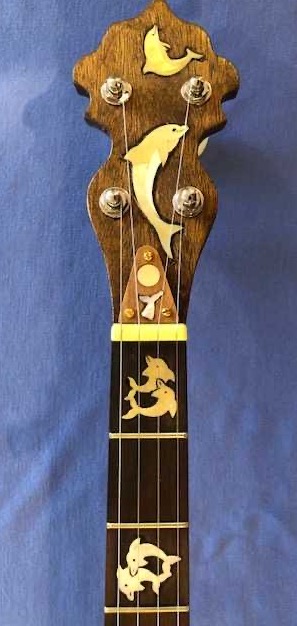
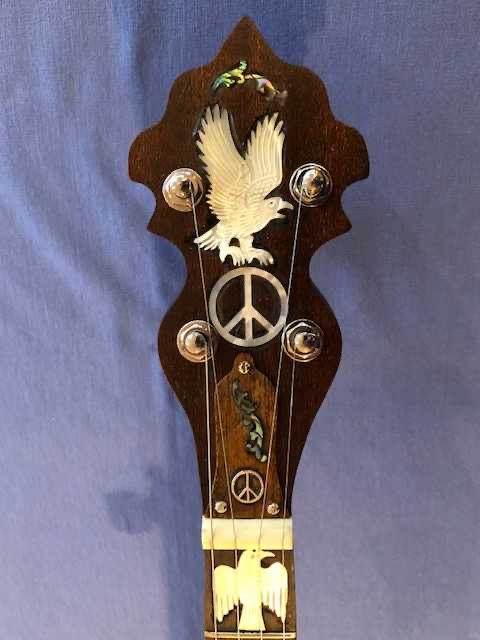
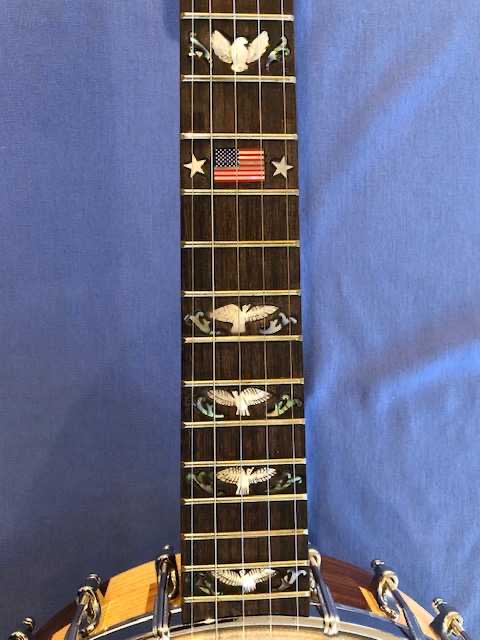
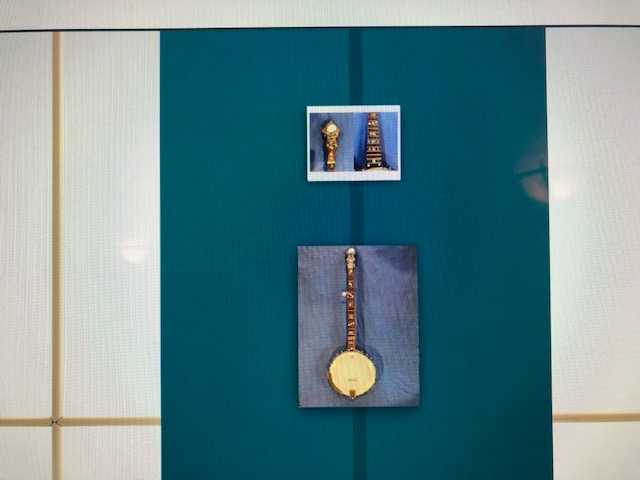
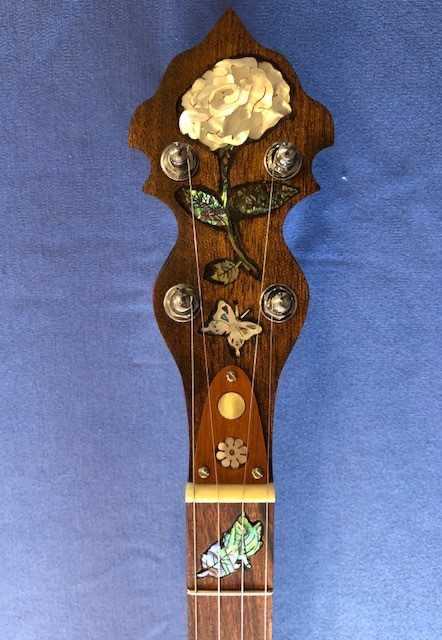
The BRC workshop submitted a banjo entitled “Ozark Spring” which was accepted into the juried competition and displayed (above) on a wall of the virtual gallery flanked by faux windows.

On the instrument`s peg head, a small butterfly curiously approaches the stem of a giant white rose (right). The sun and a flower are inlayed on the truss rod cover, and leafed-out greenery appears immediately at the first fret space.

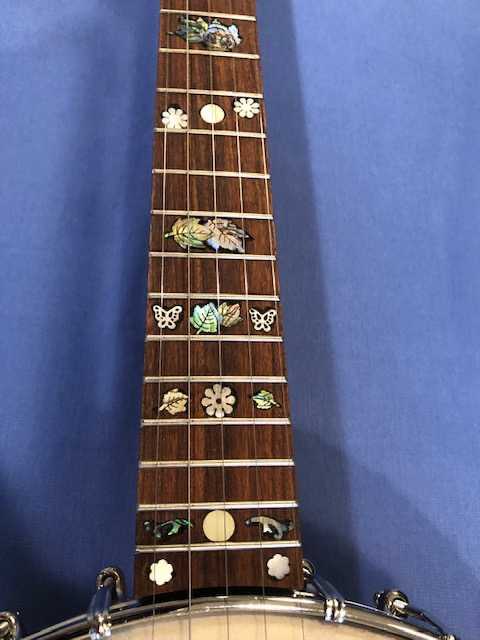
Along the fingerboard (above left), the aforementioned themes are echoed as the sun, flowers, small butterflies, and plush leaves mark harmonic intervals.

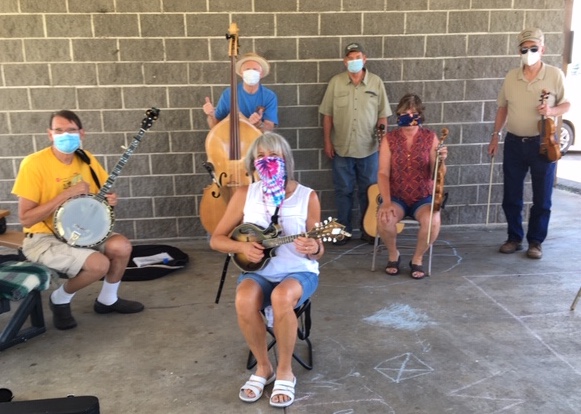
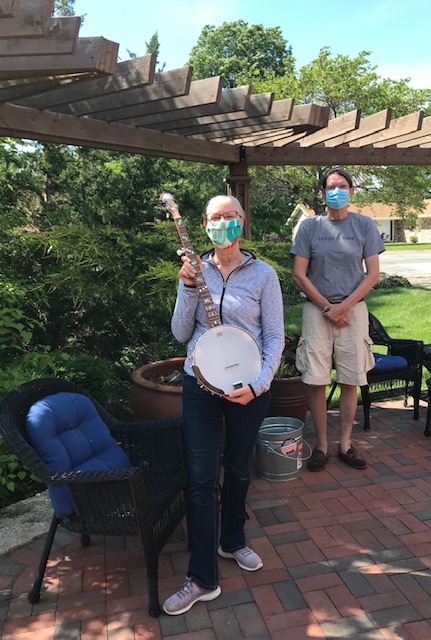
The new owner collects her “Ozark Spring ” banjo from the BRC founder while both wear personal protective masks (below right).

Despite these uncertain times, the summer months arrive beneath sunny and unusually blue skies which bathe a doe and her fawn perusing our lakeside garden at daybreak.

The BRC workshop wishes all our readers good health and peace.

Vega Martin Stories

Bicentennial Banjo Revisited

May 23, 2020

From the BRC Mailbox:

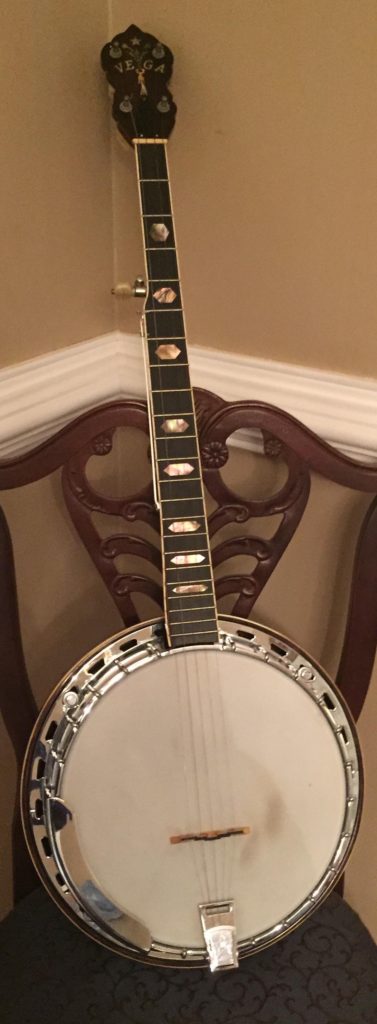
Dear Reader- Thank you for sharing the detailed photographs of your mint-condition Vega Martin V-76 banjo and its documents. This model of a commemorative 5-stringer and its matching D-76 guitar celebrated the US Bicentennial year of 1976 and represented C.F. Martin`s first foray into a limited edition series. The company planned to manufacture a total of seventy-six V-76 banjos as well as 1,976 issues of the D-76 guitar.

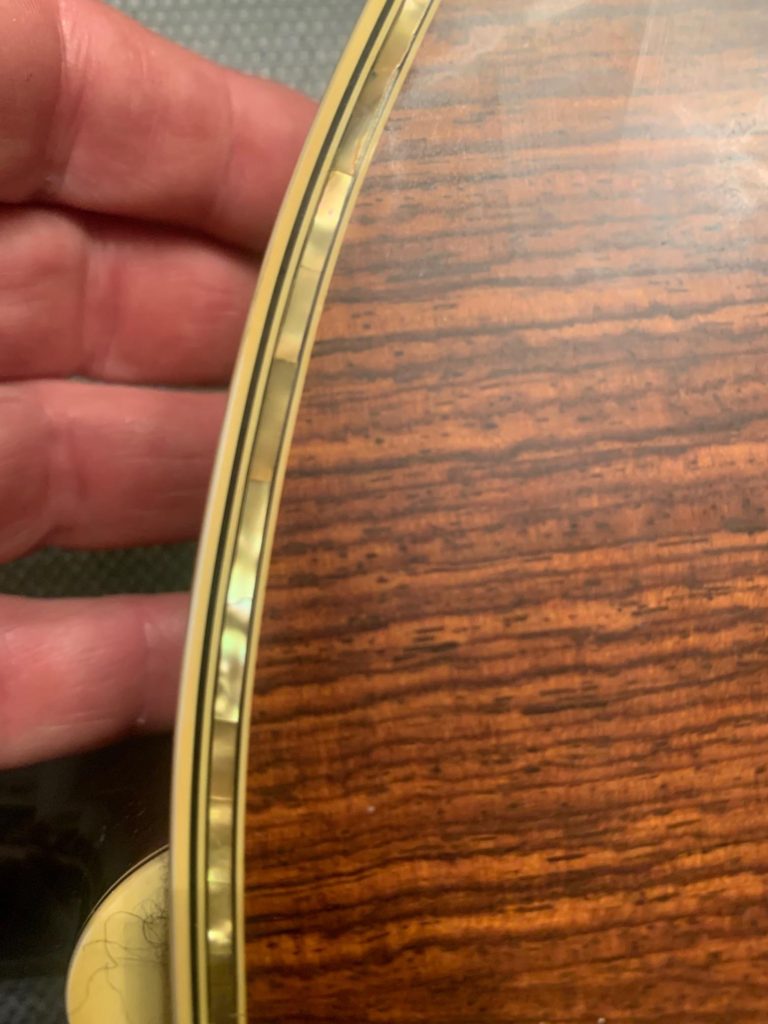
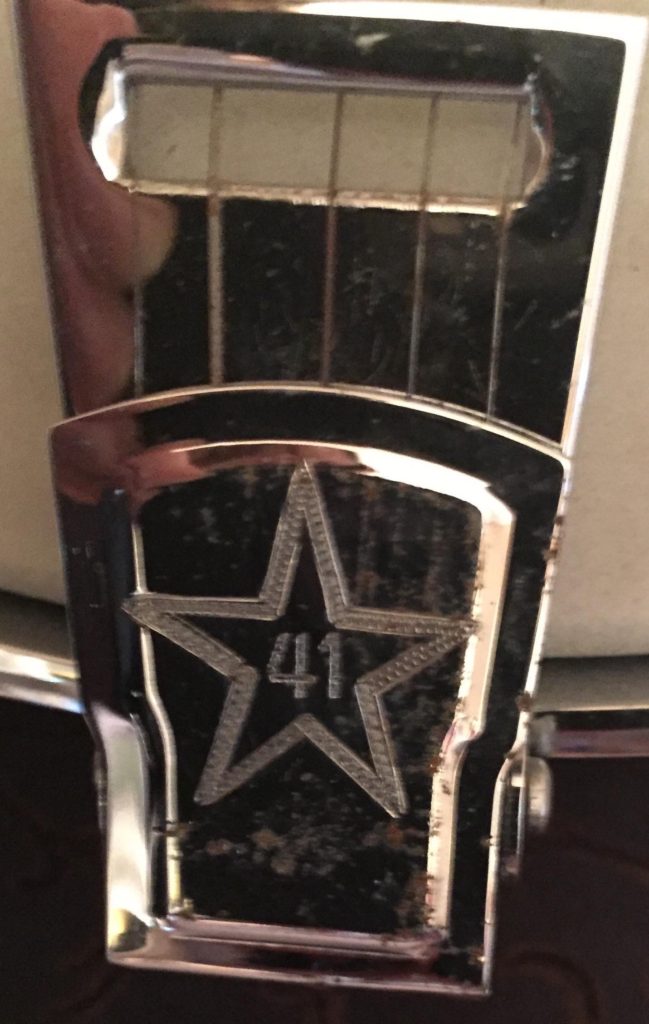
The outer rim of the banjo resonator had a unique strip of herring bone marquetry, and there were thirteen mother of pearl (MOP) stars on the fretboard representing the original 13 colonies. Engraved on the tailpiece and truss rod cover was the number “76.”

There was a MOP eagle on the peg head, and also on the back of the resonator. A commemorative brass plaque with the owner`s name and special Bicentennial production number of the banjo (#53 in your case) was placed on the back of the headstock, and these data were entered into the Martin Archives.

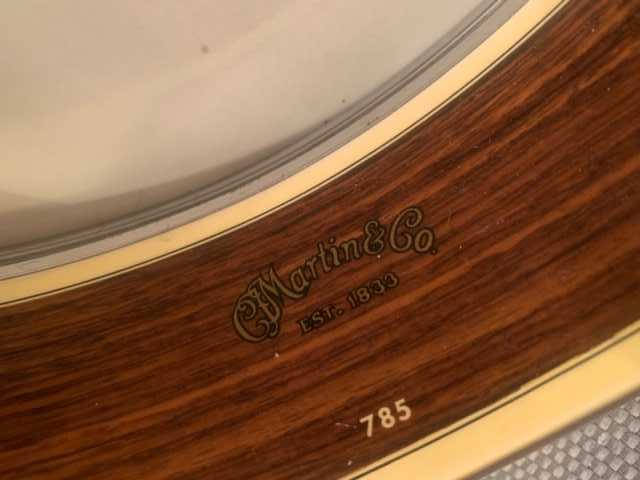
Your banjo with its factory serial number 1577, located on the interior of the rim, was one of a lot of sixty V-76 banjos built in early 1976 per Shop Order 2287 in Nazareth, PA. According to the Shop log book, a total of eighty-one V-76 instruments were ultimately made, as well as an additional seven V-76E banjos designated for employees only.

C.F. Martin overestimated the market for the V-76 and D-76 instruments, and both were overpriced. This eventuated in an unsold inventory for the factory and its distributors. My spouse reflects that the marketplace was likely still clouded by the turmoil of the recent Vietnam Conflict. Having served active duty military in the late 1970`s, I proffer that this theory may well be explanatory. The Martin Company was thereafter wary to venture into limited edition series for years. C. F. Martin did not publish its suggested retail prices after 1971, so the original price tag on the V-76 is not readily known. At this writing, the factory is currently shuttered because of the pandemic, and maybe you could email them after they reopen to ask if their Archives might shed any light on the 1976 pricing data for the V-76 banjo.

Because of the pristine condition and thorough documentation of your instrument, my estimate is that its current worth in about $1.7K. Hope this helps.

From the BRC: Be safe, be well, and be picking this holiday weekend, and be thankful to our service men and women.

Art Shows

Visual Mixtape, Party & Fox

May 9, 2020

Because of public health issues, the local art league converted its current exhibits to a virtual format until further notice. The juried “Visual Mixtape” competition asked members to fashion entries based on the works of their most influential artist.


In the tour of this virtual gallery, the BRC founder`s “High Lonesome Sound ” banjo is stationed on a far wall adjacent to a doorway. It was cited among the “highlights” of the show.

All of the works in the show are listed in a catalogue for visitors to view and enlarge for more detailed images.

For close-up pictures of the “Hi-Lo-So” banjo, please scroll back to the March 21, 2020 posting of “A Busy Season.”

In a separate “Patron`s Party” virtual gallery, the BRC Terrapin banjo is exhibited as a donation in a fund-raiser for the community Art League. For additional photos of the Terrapin, please scroll back to the January 26, 2019 posting of “Over Indulgence.” The banjo sold in the opening hours of the fund-raiser.

After studying these virtual galleries online in detail, the BRC founder gazed out the back window of his workshop for a reality check and took the above photo. Mr. Fox reconnoiters our lakeside garden for breakfast while Mrs. Fox and her young kits wait just off-camera.

Bio

Zooming Banjos

April 25, 2020

As challenging public health issues make us homebodies, the BRC founder and spouse interact with grandchildren and their parents in Texas, Illinois, and Missouri, simultaneously via Zoom link-up.

Strumming his long neck Ode banjo, granddad leads the virtual family reunions in sing alongs of familiar animated kids` tunes. The youngsters happily dance on the sofa at home while moms and dads join the grandparents in a noisy and spirited chorus of “You are My Sunshine.”

The lakeside BRC domicile, where our kids grew up and the grandchildren visit each summer, has an almost year-round audio backdrop of a noisy flock of Canada geese. These honking avians recently vanished from the neighborhood leaving a discernible silence.

Only a Great Blue Heron, a couple of hawks, and an occasional bald eagle now patrol the silent waters. Canada goose couples are monogamous, and the March through May nesting season explains their disappearance and quietude. The female goose builds the nest and incubates the eggs, and the gander guards it. Sometime soon, the newly expanded families will proudly ply our lake in linear flotillas of fuzzy goslings bracketed by noisy and watchful parental honkers.

In the meantime, the grandkids send artful notes of appreciation to Grandpa Doc between the Zoom songfests.

Hopefully, our grandchildren will be able to revisit these familiar Missouri environs sometime this summer and watch the goslings growing-up.

In these uncertain times, the BRC founder wishes all our readers Peace and good health. Stay positive and don’t let those strings get rusty.

BRC Activities

Gear-Up the 5th

April 11, 2020

Vintage banjos from yesteryear feature a friction type non geared 5th string tuning peg with a 1:1 ratio as seen in this original nickel-plated tuner on a Vega Martin VIP-5 banjo manufactured in 1975. Some collectors prefer to leave these original parts in place to sustain the value of a classic instrument.

As seen in this 1994 gold-plated Stelling “Masterflower” 5-stringer, modern banjos come routinely out-fitted with a 5th peg bearing a rounded gear box with fine-tuning ratios.

In his workshop experience of installing modern geared 5th string tuning pegs, the BRC founder has encountered a couple of banjos in which it was discovered that the truss rod within the interior of the neck was oddly positioned and blocked proper seating of a contemporary tuner. When inserting a newer tuning device, the BRC craftsman prefers that the rim of its rounded gear box sits firmly on the outward slope of the neck at the fifth fret. This facilitates the geared tuner to be stable and snugly secured in the peg hole which has been lined with a mix of wood glue and sawdust. Rubber band compression protects its alignment during an overnight drying phase.

On the rare occasion when the truss rod preempts proper seating of the new tuning peg, the BRC founder fashions a wooden collar to act as a spacer and stabilize the replacement tuner. Shaped somewhat like a signet ring, this collar is constructed by stacking thin layers (about 1.8 mm thick) of maple veneer united with wood glue. The buttressed “Show-Me” ring is then gently sculpted with sand paper.

The above vintage 1968-69 Baldwin C banjo originally came from the factory with an old fashioned 1:1 ratio friction 5th tuner, but the truss rod location prevented proper seating of a replacement geared tuning peg. The Show-Me collar was installed to stabilize the new 5th string tuner and is hardly visible to the viewer.

On the underside of the Baldwin C neck, the buttress of the ringed Show-Me collar is barely detectable to the eyes of the musician and does not interfere with musicianship.

The above banjos are part of his antique and active instrument collection, and the BRC founder wishes all our readers to be safe and be well. Peace.